Jewish tradition (HaMotzi)
Baruch atah Adonai, Eloheinu melech ha'olam, hamotzi lechem min ha'aretz.
“Blessed are You, Lord our God, Ruler of the universe, who brings forth bread from the earth.”

The Earth element
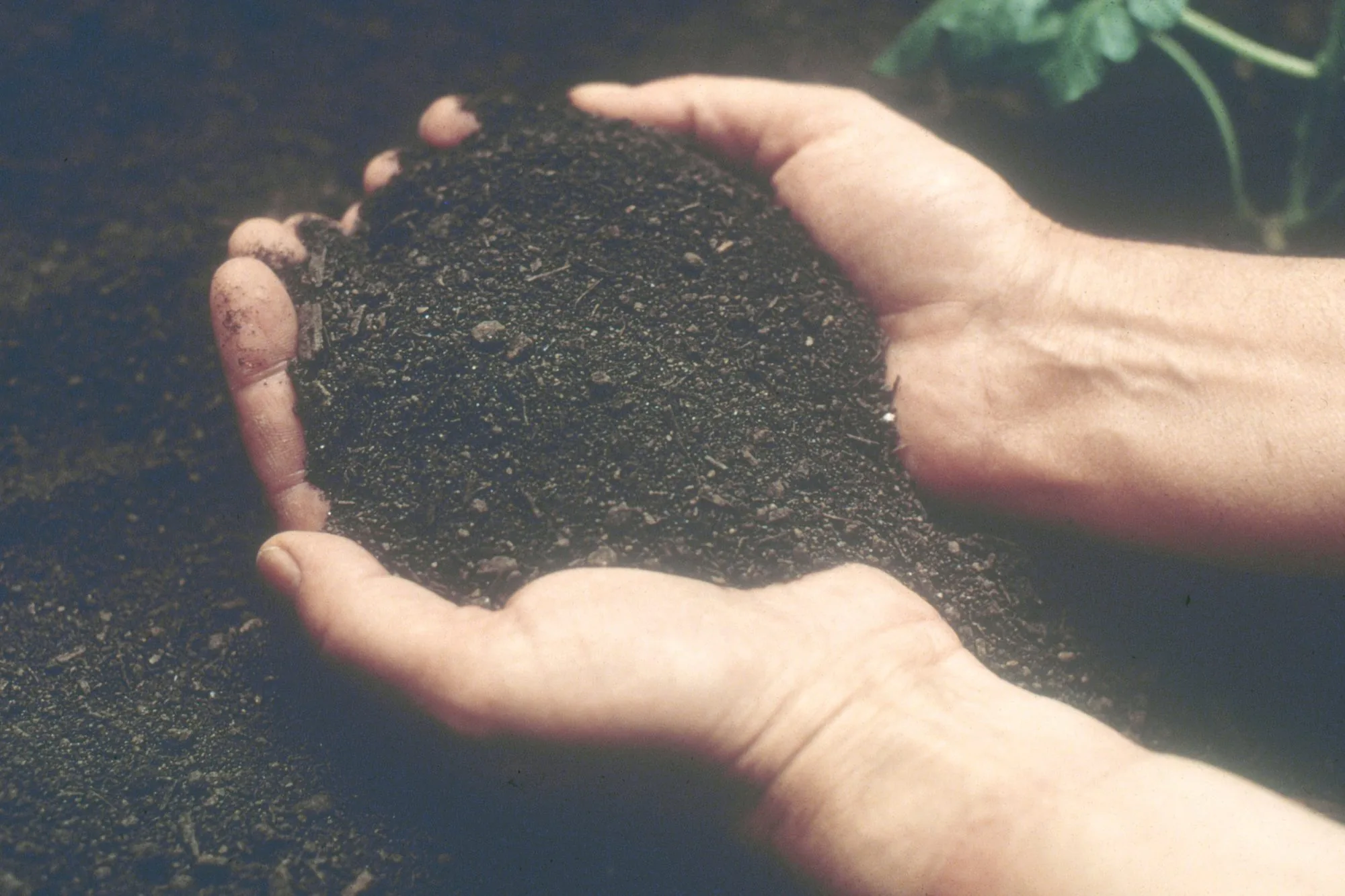
Earth: the element you can hold in your hand.
Every meal is a meeting with the ground. Reconnecting begins with noticing where your food comes from and what it becomes.
Meaning
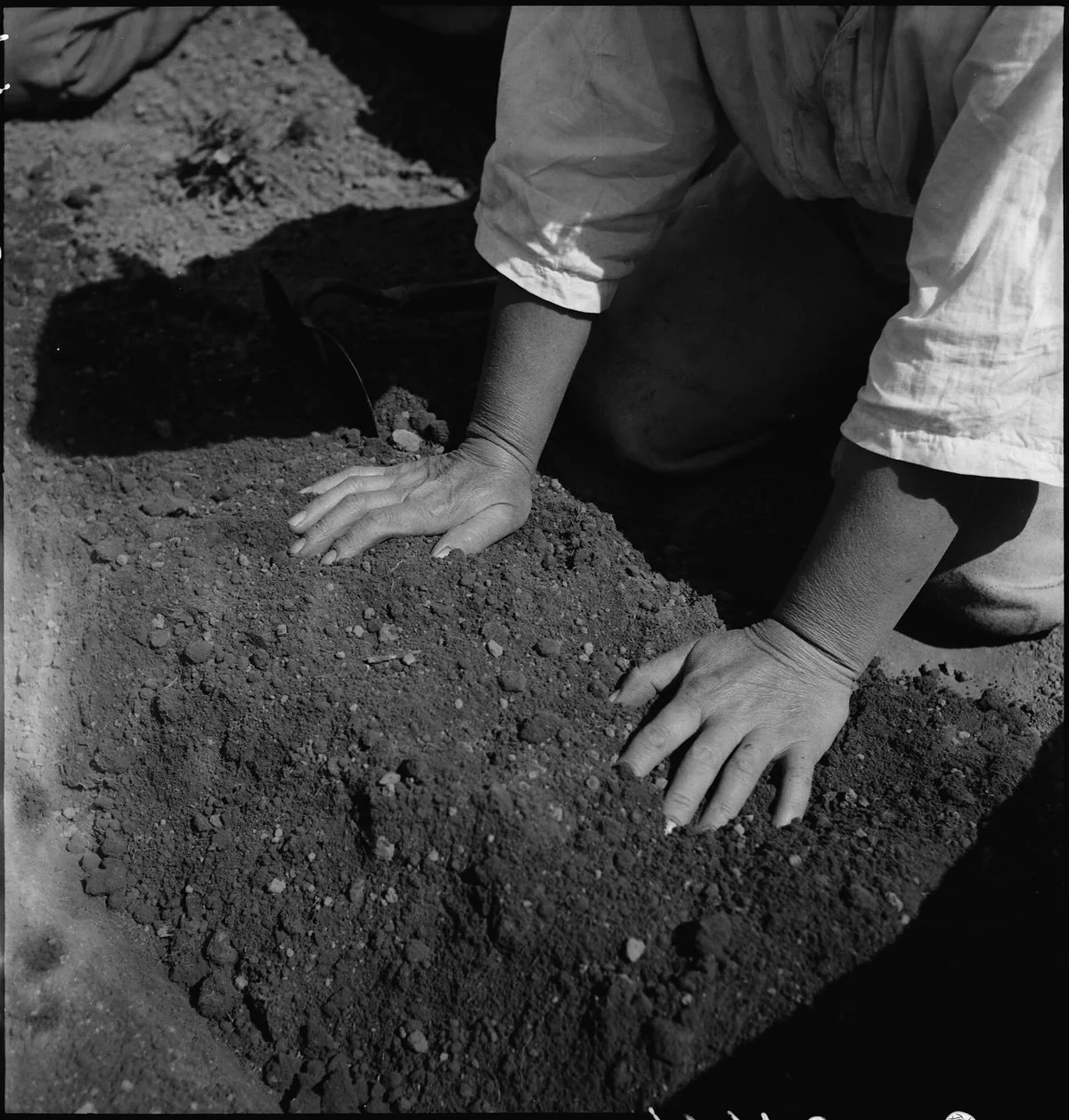
Earth represents the body, nourishment and the ground beneath us. It is one of the five elements Aquarian Alchemy invites you to reconnect with through everyday practice, and its action is simple: nourish.
In classical philosophy and alchemy, Earth is a symbolic element: the solid, stable, nourishing part of the world. Scientifically, soil is not a single chemical element. It is a living mix of minerals, water, air, organic matter and countless organisms.
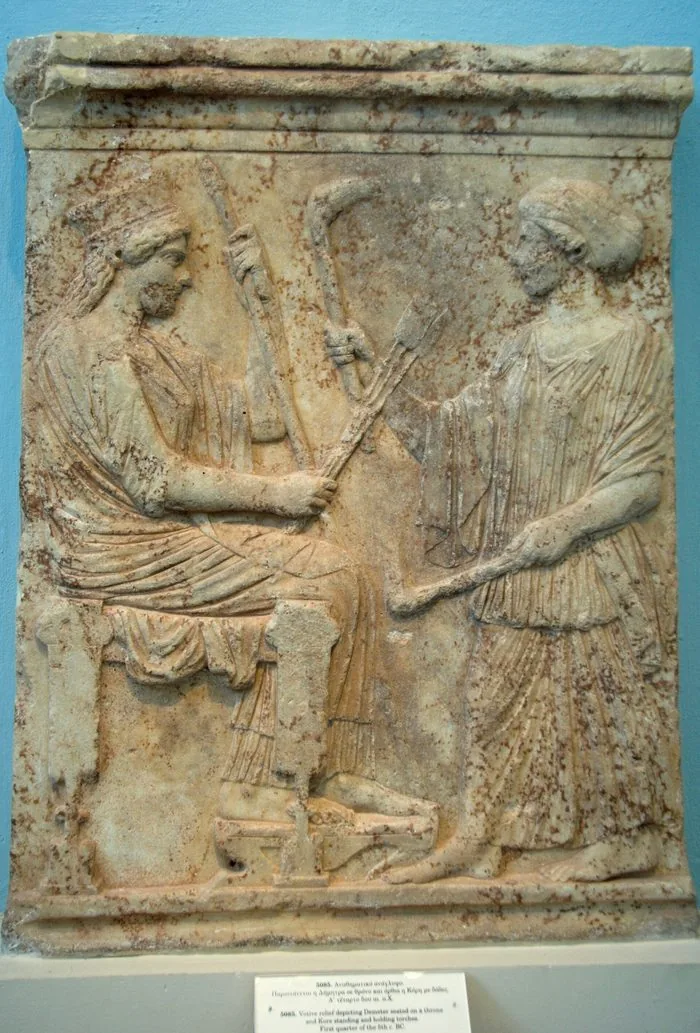
Demeter and Kore · marble relief, Eleusis, 500–475 BCE · CC BY-SA
Earth is one of four classical elements, alongside Water, Air and Fire, associated with what is solid and heavy.
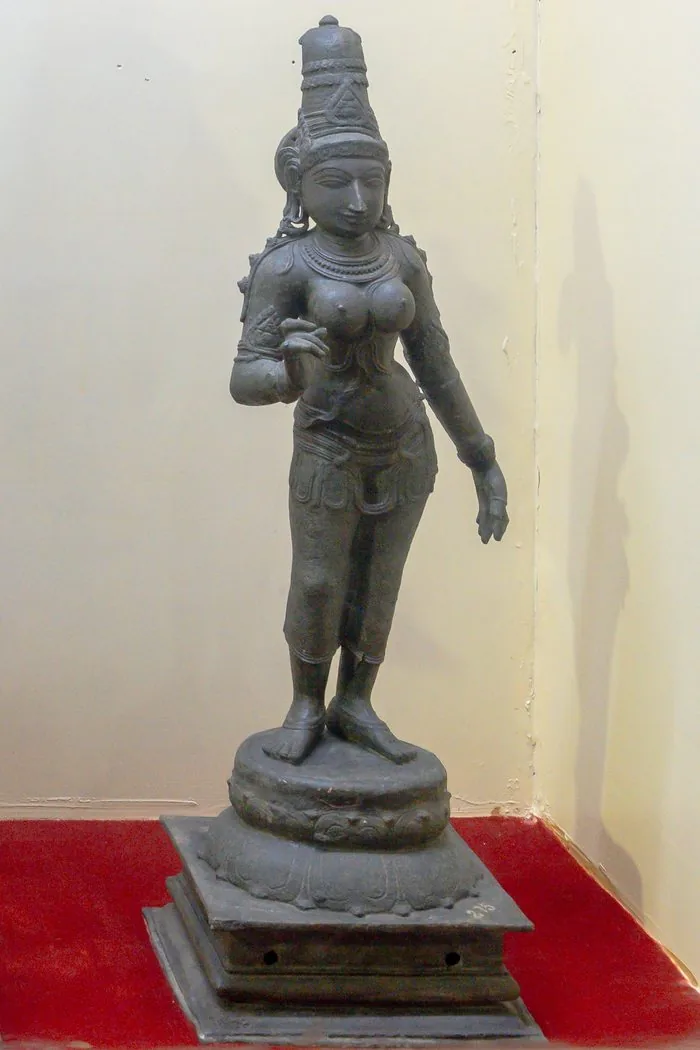
Bhudevi · bronze · public domain
Earth is prithvi. In yoga it is linked to the root chakra, muladhara, and in Ayurveda it combines with water to form kapha, the quality of structure and steadiness.
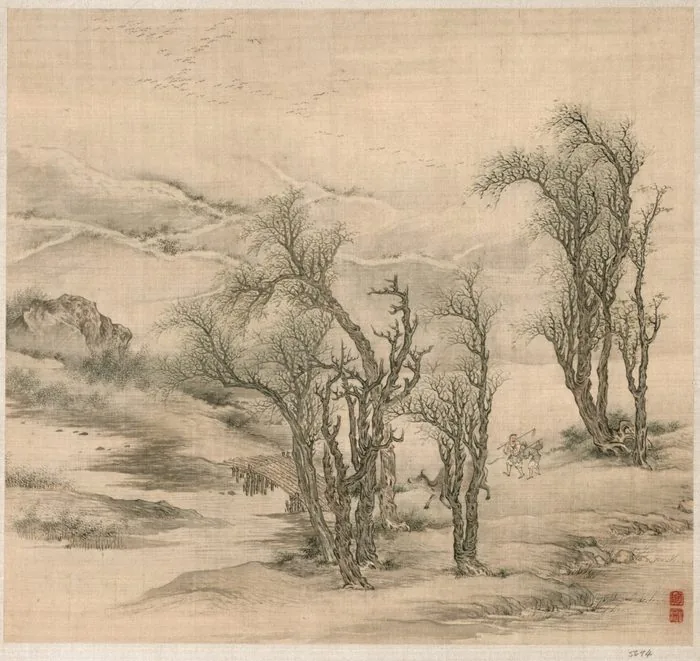
Returning Peasants in a Spring Evening · Tao Hong · CC0
In wuxing, Earth is one of five phases of change, traditionally linked to the sweet flavor and to digestion.
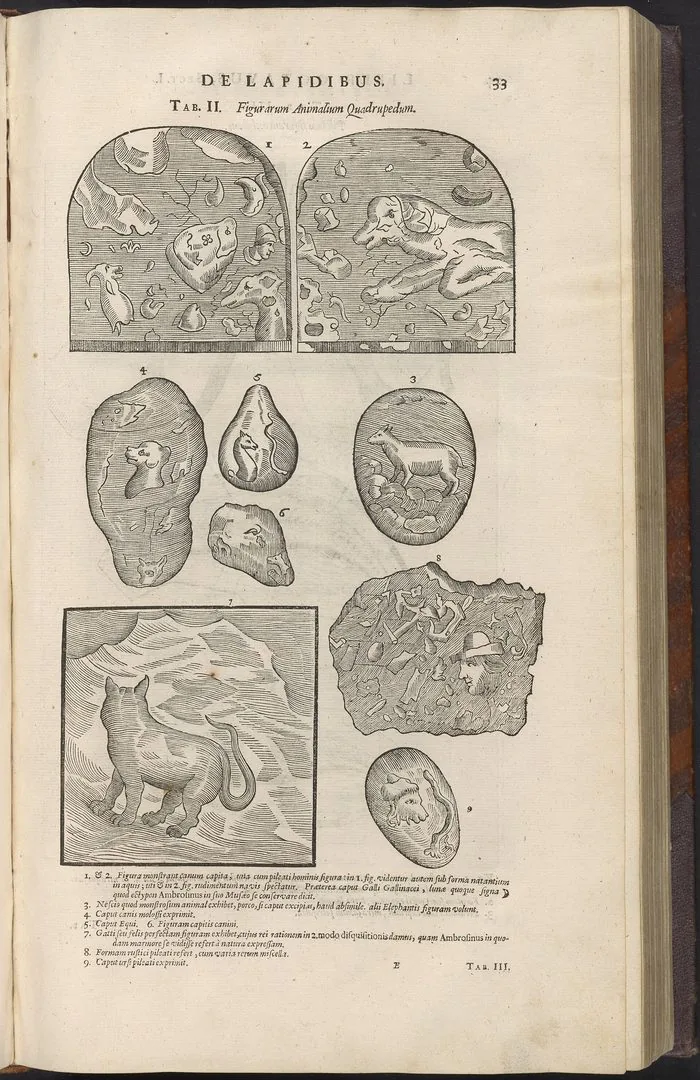
Mundus Subterraneus · Athanasius Kircher, 1665 · public domain
The Earth element symbol is a downward-pointing triangle crossed by a horizontal line.
Leonard Orr
The body is where spiritual practice meets daily life.
Leonard Orr, who developed Rebirthing Breathwork, taught spiritual purification through the elements. For Earth, his teaching was practical and physical: what and how much we eat, moving the body every day, walking, and doing work we love.
Orr also taught regular fasting as an Earth practice. We share this as part of his teaching, not as advice. Fasting is not appropriate for everyone, and this page does not recommend it.
Orr treated mastery of eating, what and how much, as the heart of Earth purification.
He described a daily walk as a basic Earth practice anyone can keep.
He encouraged everyone to find a personal exercise practice.
He counted meaningful, physical work, including housework and gardening, as Earth practice.
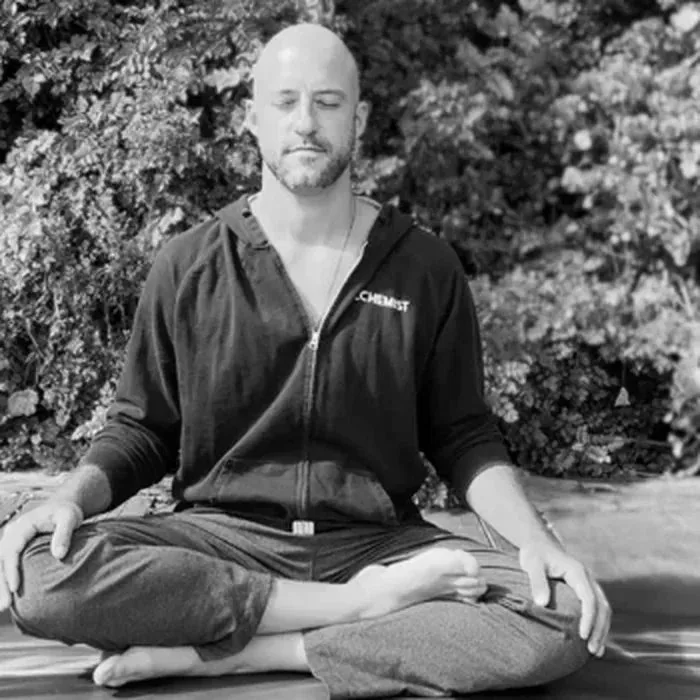
Erik Casano trained with DP Mahesh in Haidakhan and practices daily conscious breathing alongside his Earth practices. Before eating, he pauses to feel gratitude. He eats slowly, keeps his evening meal simple and light, and treats each meal as a moment of connection rather than a task.
“Before eating, it's very important to feel gratitude.”
Erik Casano
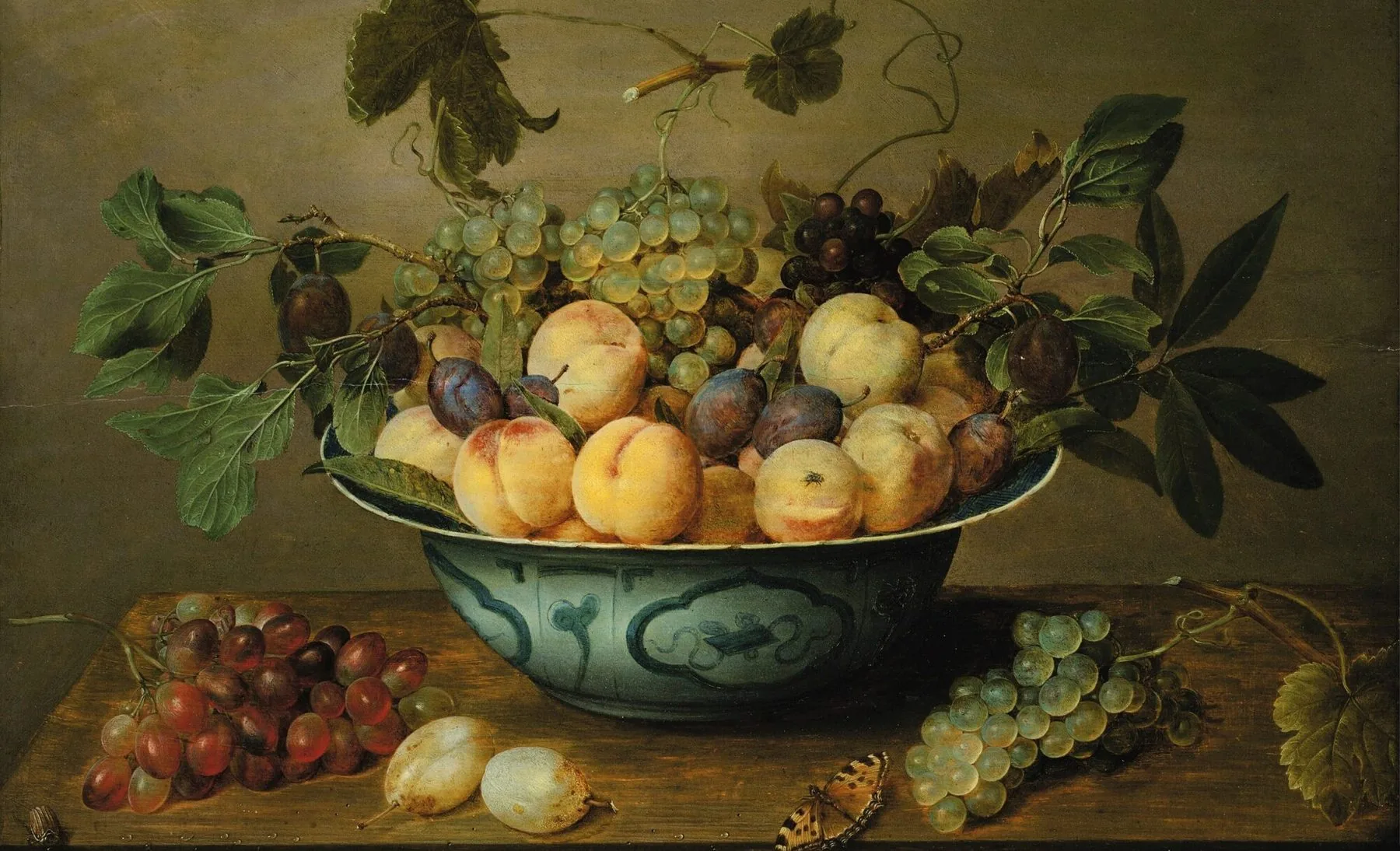
Try it
A two-minute practice for your next meal.
Before your next meal, take two minutes to follow one bite back to the ground it came from. No special food or setting is needed.
This short practice brings attention to the journey your food has taken, and to the moment it becomes part of you. You can do it with any meal or snack.
No-food option: If you'd rather not practice with a meal, hold a stone, a handful of soil or a houseplant's pot. Notice its weight, texture and temperature for two minutes.
0:00
of 2:00
Soil
The ground is alive.
Soil is not just dirt. It is a living, layered system that took centuries to form, and almost everything we eat depends on it.
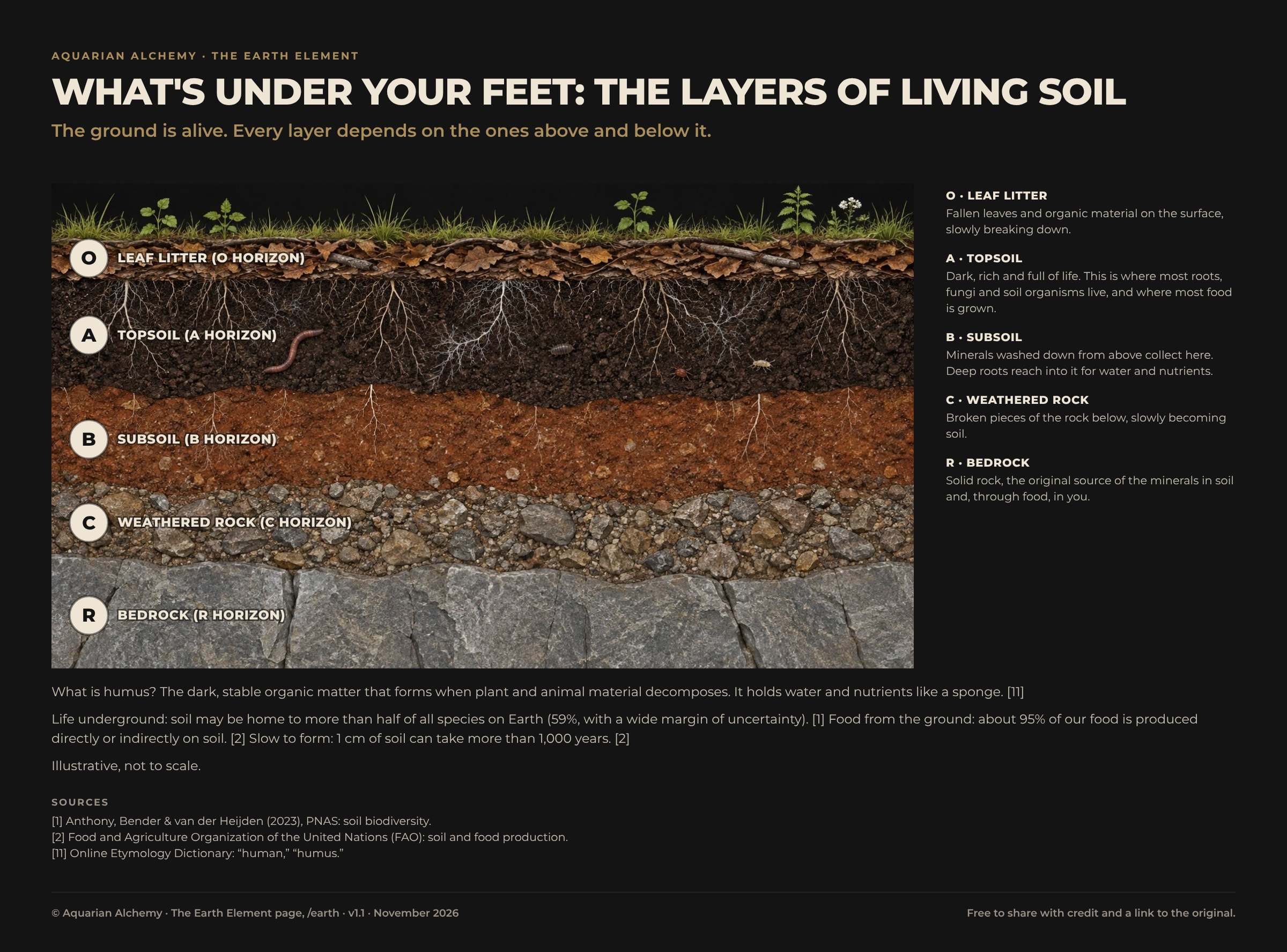
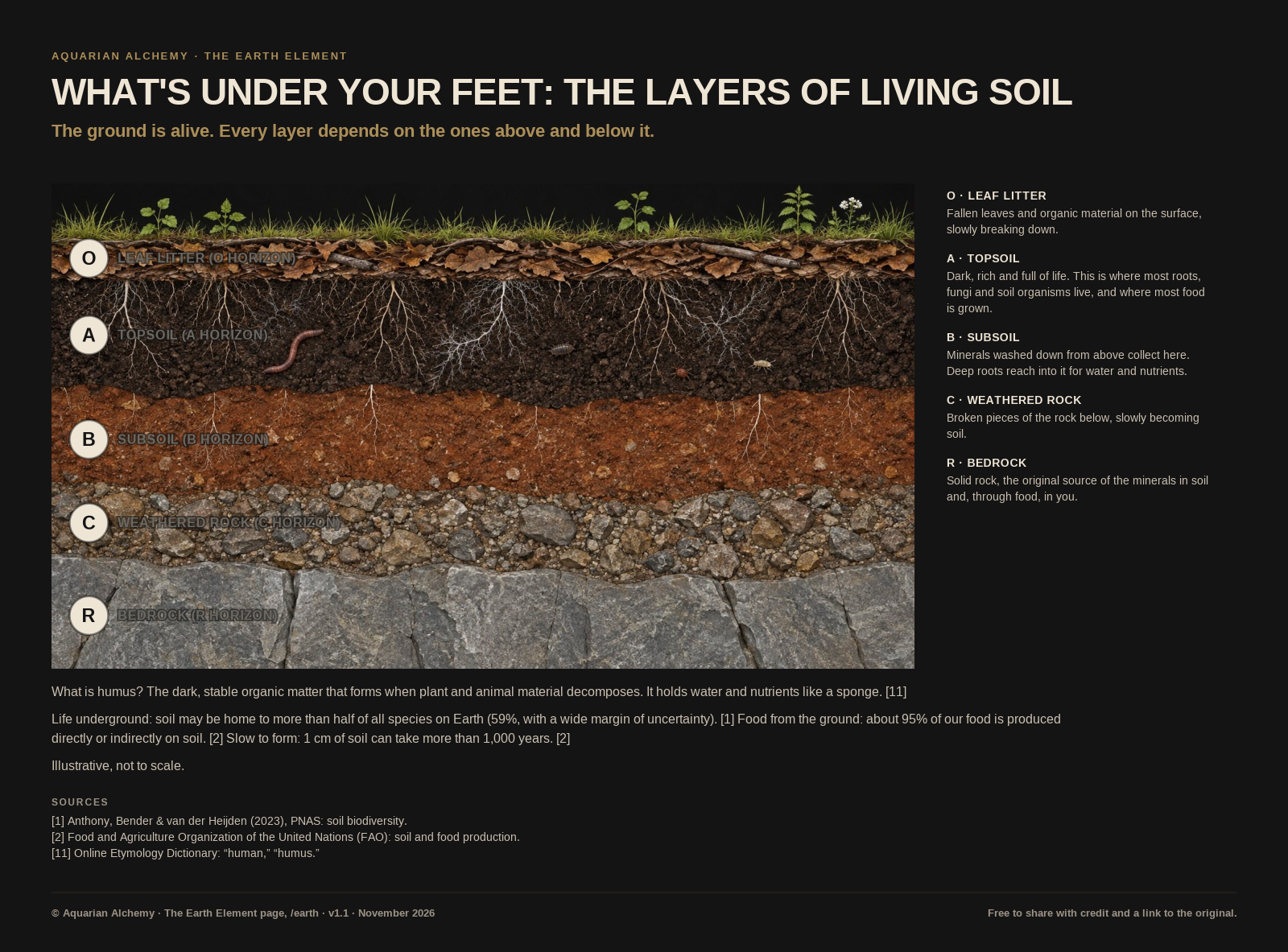
What's Under Your Feet: The Layers of Living Soil
Illustrative, not to scale.
Fallen leaves and organic material on the surface, slowly breaking down.
Dark, rich and full of life. This is where most roots, fungi and soil organisms live, and where most food is grown.
Minerals washed down from above collect here. Deep roots reach into it for water and nutrients.
Broken pieces of the rock below, slowly becoming soil.
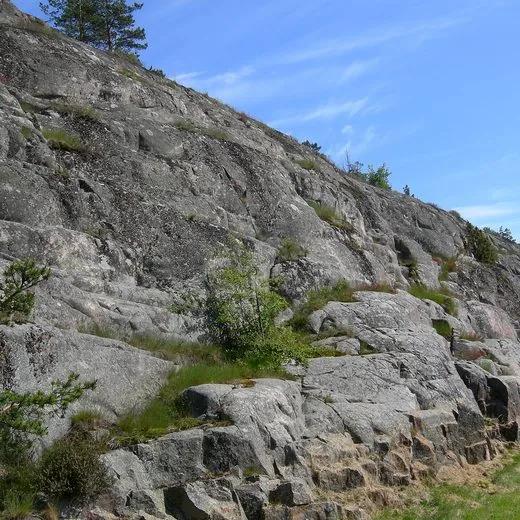
Solid rock, the original source of the minerals in soil and, through food, in you.
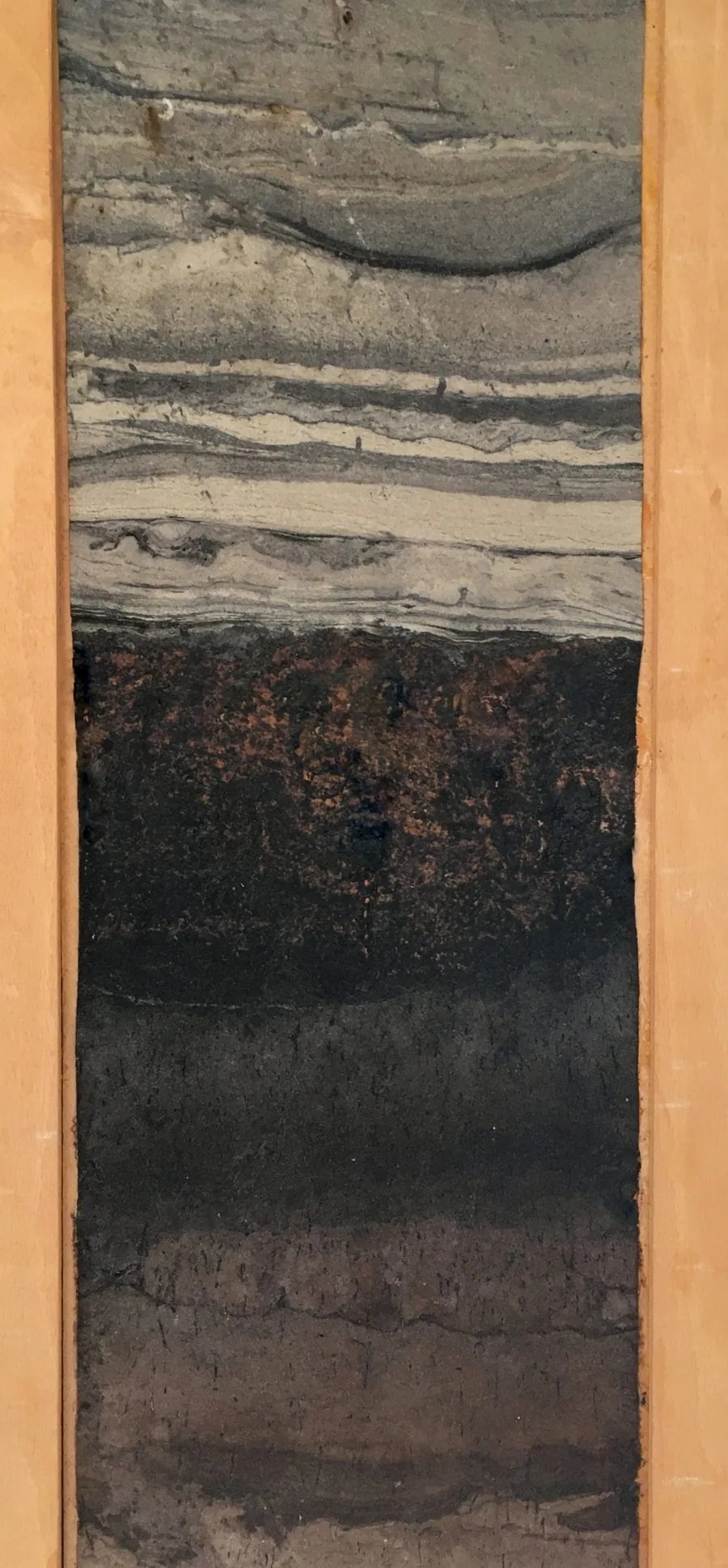
A soil profile, preserved as a core · Cultureel Gelderland · CC0
Humus is the dark, stable organic matter that forms when plant and animal material decomposes. It holds water and nutrients like a sponge. The words human and humus are both linked to an ancient root meaning earth. [11]
59%
Life underground. Scientists estimate that soil may be home to more than half of all species on Earth (59%, with a wide margin of uncertainty). [1]
95%
Food from the ground. About 95% of our food is produced directly or indirectly on soil. [2]
1 cm
Slow to form. The FAO estimates that forming just one centimeter of soil can take more than 1,000 years. [2]
Every layer depends on the ones above and below it, just as we depend on all of them.
Your body
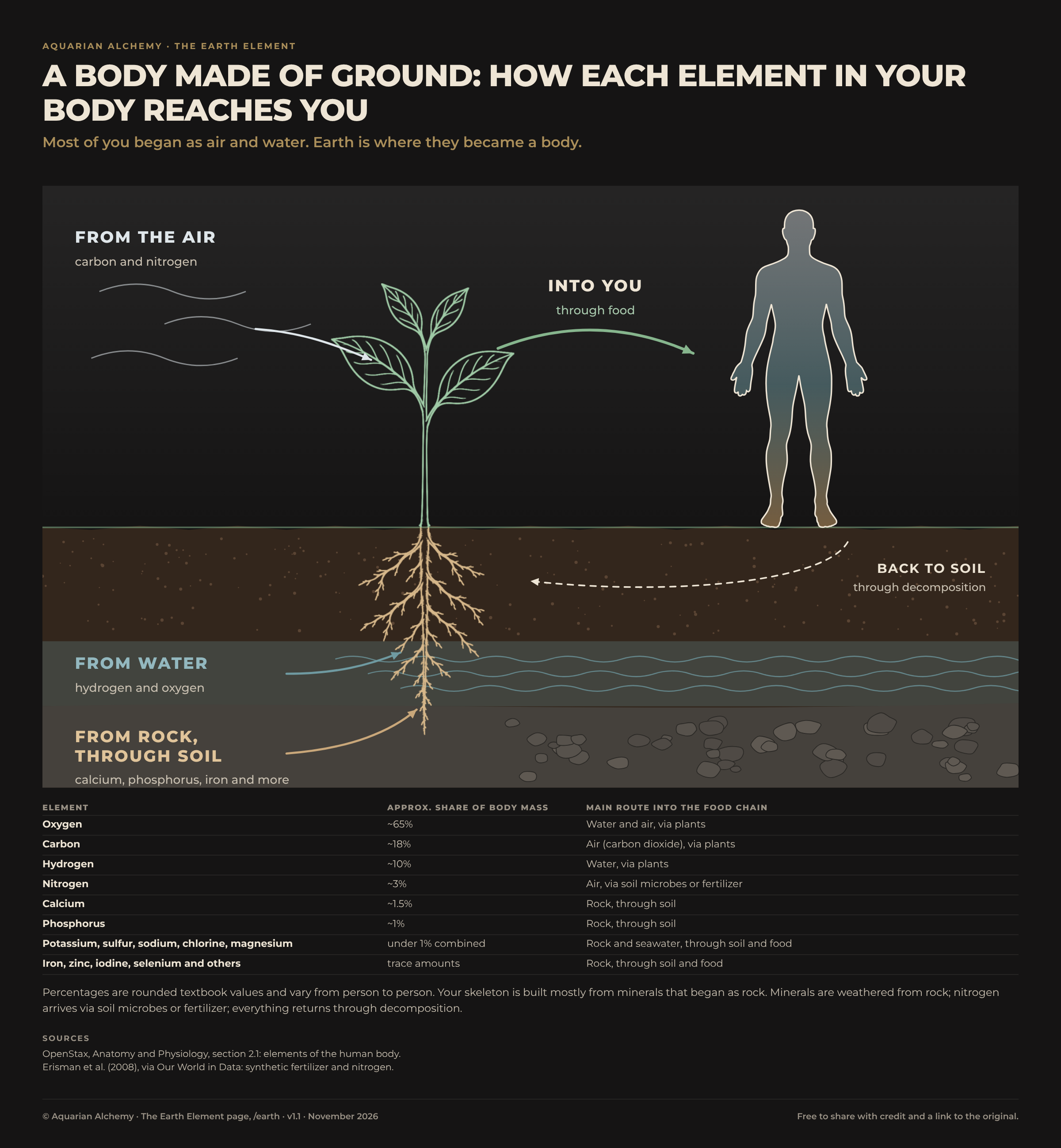
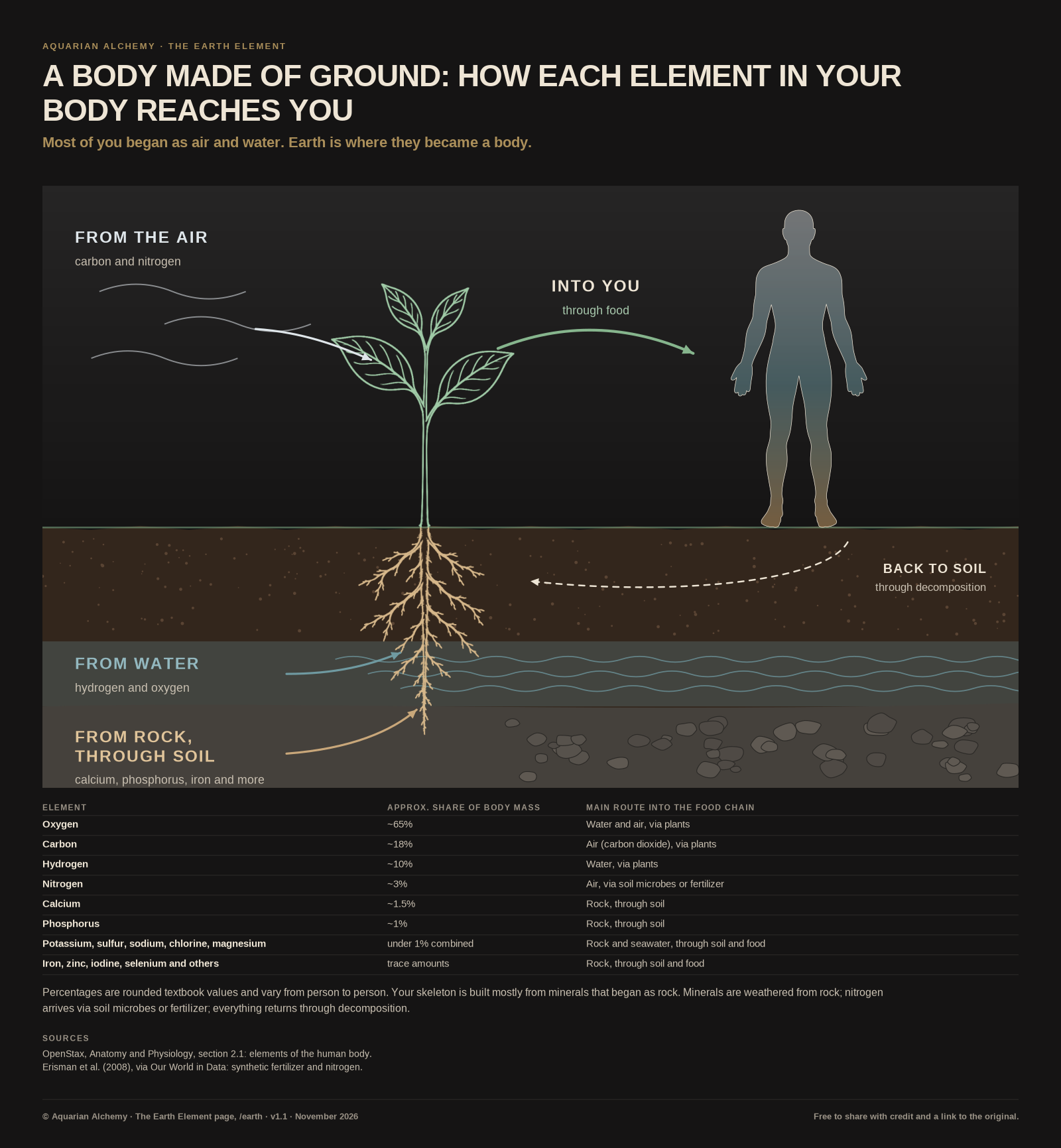
Most of you began as air and water.
By mass, about 96% of the human body is just four elements: oxygen, carbon, hydrogen and nitrogen. They entered the food chain from the air and from water. The rest, including the calcium and phosphorus in your bones, came from rock. Plants rooted in soil brought all of them together. Earth is where air, water and stone become a body. [5]
A Body Made of Ground: How Each Element Reaches You
| Element | Approx. share of body mass | Main route into the food chain |
|---|---|---|
| Oxygen | ~65% | Water and air, via plants |
| Carbon | ~18% | Air (carbon dioxide), via plants |
| Hydrogen | ~10% | Water, via plants |
| Nitrogen | ~3% | Air, via soil microbes or fertilizer |
| Calcium | ~1.5% | Rock, through soil |
| Phosphorus | ~1% | Rock, through soil |
| Potassium, sulfur, sodium, chlorine, magnesium | under 1% combined | Rock and seawater, through soil and food |
| Iron, zinc, iodine, selenium and others | trace amounts | Rock, through soil and food |
Percentages are rounded textbook values and vary from person to person. Your skeleton is built mostly from minerals that began as rock.
You are not separate from the ground. You are the ground, rearranged.
Story
Every meal has a longer story than we think.
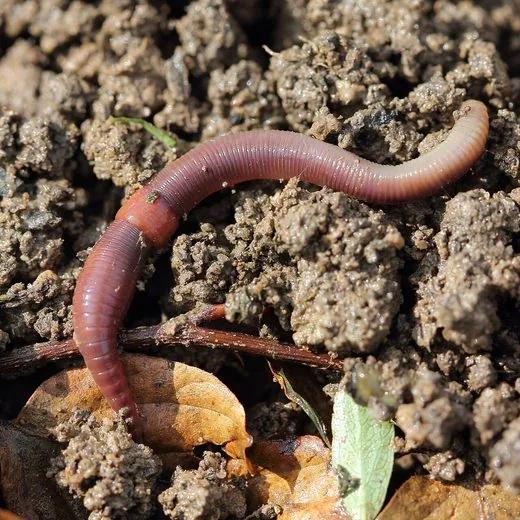
Take a simple bowl of vegetable soup. The carrot grew from a seed in topsoil. Its sweetness began as carbon dioxide in the air and sunlight on a leaf. The minerals in it were pulled from the soil by roots and fungi. The soil itself was built over centuries by roots, fungi and earthworms.

 Bowl
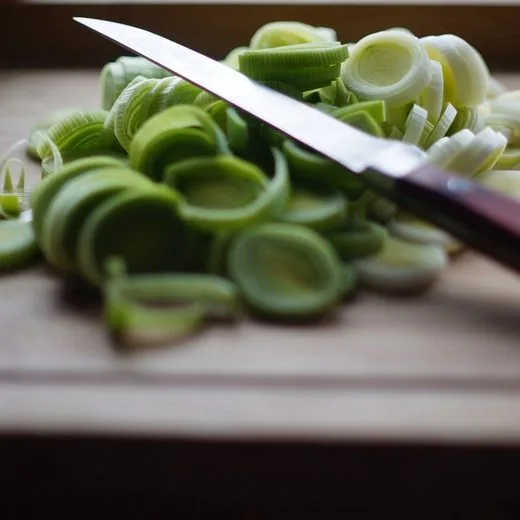 Kitchen
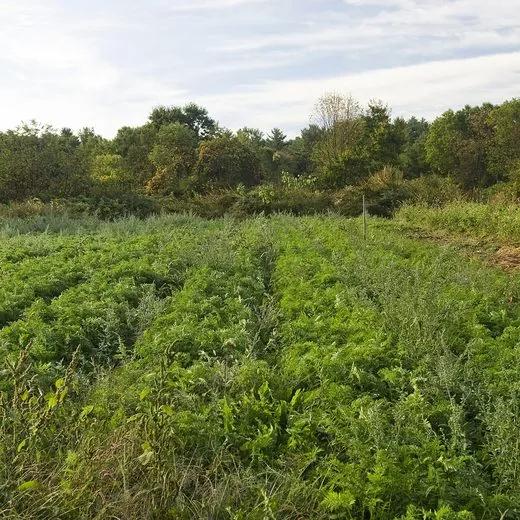 Field
 Soil
 Rock
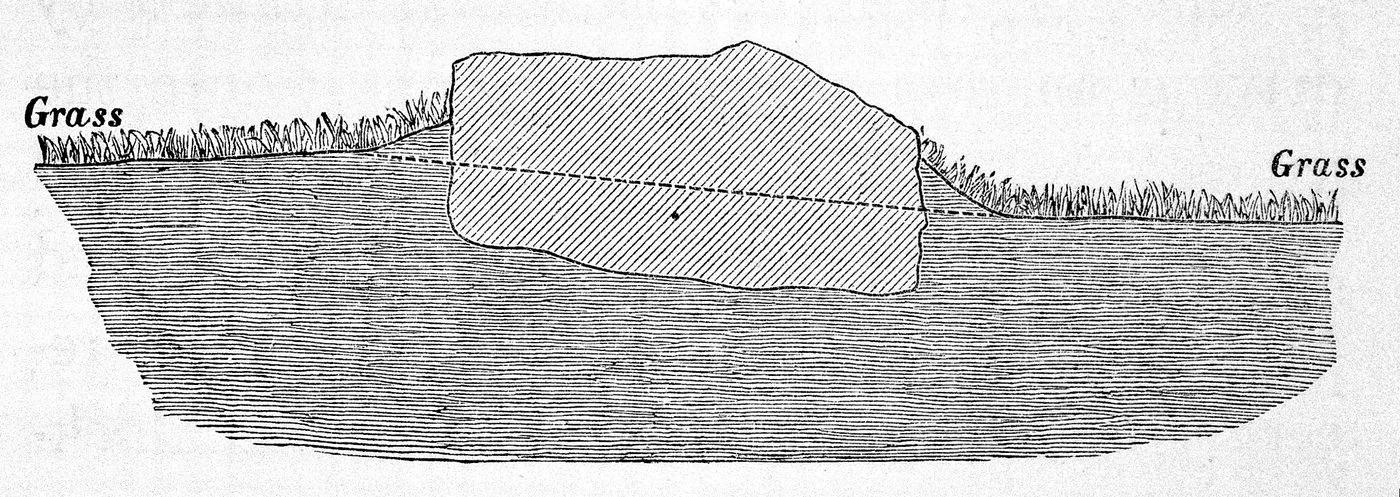
Charles Darwin spent the final years of his life studying earthworms. In his last book, published in 1881, he showed that worms constantly carry soil to the surface, slowly burying stones and even ancient ruins. In one test, chalk fragments scattered on a field lay under about seven inches of soil after 29 years. He also recorded stones slowly sinking into the ground.
The man who changed how we understand life ended his career measuring the creatures that make soil. It was a fitting last subject: everything else depends on it.
When the meal is over, its scraps can return to the ground through compost, feeding the soil that will feed the next harvest. Nourishment is not a straight line. It is a circle.
The next time you eat, you are taking part in a story that began in the ground.
Sources
Evidence
Understanding the difference between science and belief.
The connection between soil, food and the body is well established. Claims about specific eating practices are more mixed. Here's what the evidence tells us.
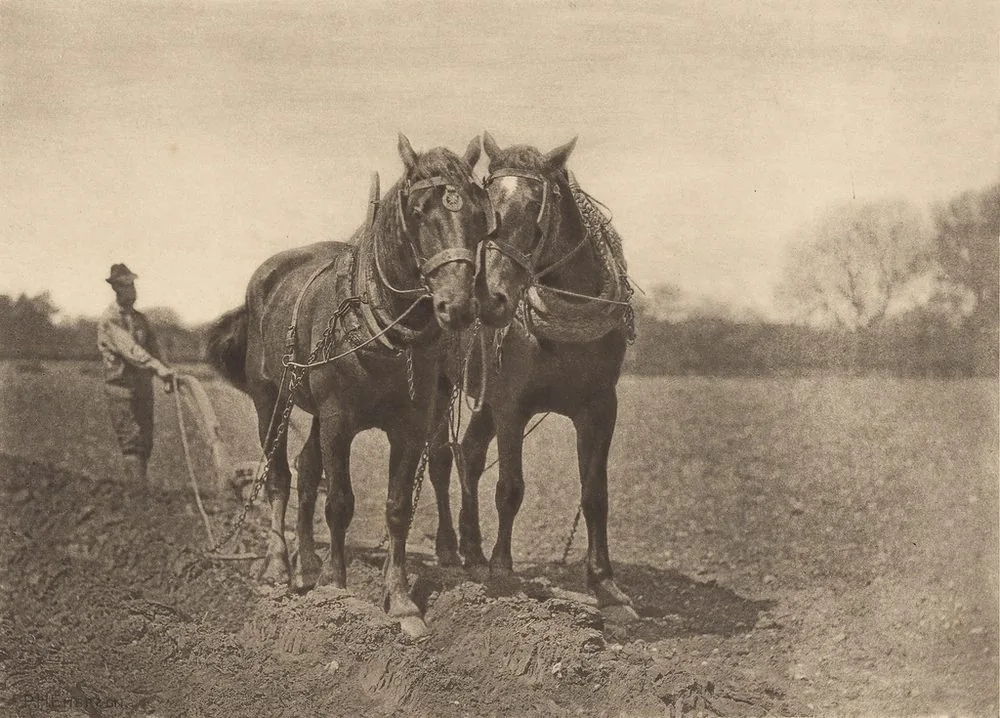
The minerals in your body, including the calcium and phosphorus in your bones, reach you through food grown in soil.
A review of 22 laboratory studies found that eating more slowly reduced how much people ate at a meal, without making them hungrier afterward. Most studies tested a single meal.
In a small study in Finland, adding forest-floor soil and plants to daycare yards changed children's skin and gut bacteria within 28 days. Health outcomes were not measured.
Leonard Orr taught that food mastery, fasting, exercise and work were Earth practices for spiritual purification. This is a spiritual teaching, not a proven medical effect.
Claim“Walking barefoot on the earth (earthing) heals the body.”
What we foundThe studies behind this are very small, and several were written by people connected to grounding products. Enjoy walking barefoot for the sensation, not as a treatment.
Claim“Soil is a natural antidepressant.”
What we foundThis comes from a 2007 study in mice given a soil bacterium. No study shows that touching soil treats depression in people.
Claim“Trees talk to each other through the ‘wood-wide web.’”
What we foundPlants and fungi do form real partnerships underground. But a 2023 review found the popular claims about trees sharing resources and warnings go well beyond the evidence.
Claim“Stop eating four hours before bed for better sleep.”
What we foundThe research is mixed. The clearest evidence for leaving a gap between dinner and bed concerns acid reflux, not sleep or dreams.
Sources
Daily Earth
Small moments to reconnect with the ground that feeds you.
Earth is always beneath us, yet many of us spend our days on pavement and floors. Reconnecting can begin with the simplest moments.
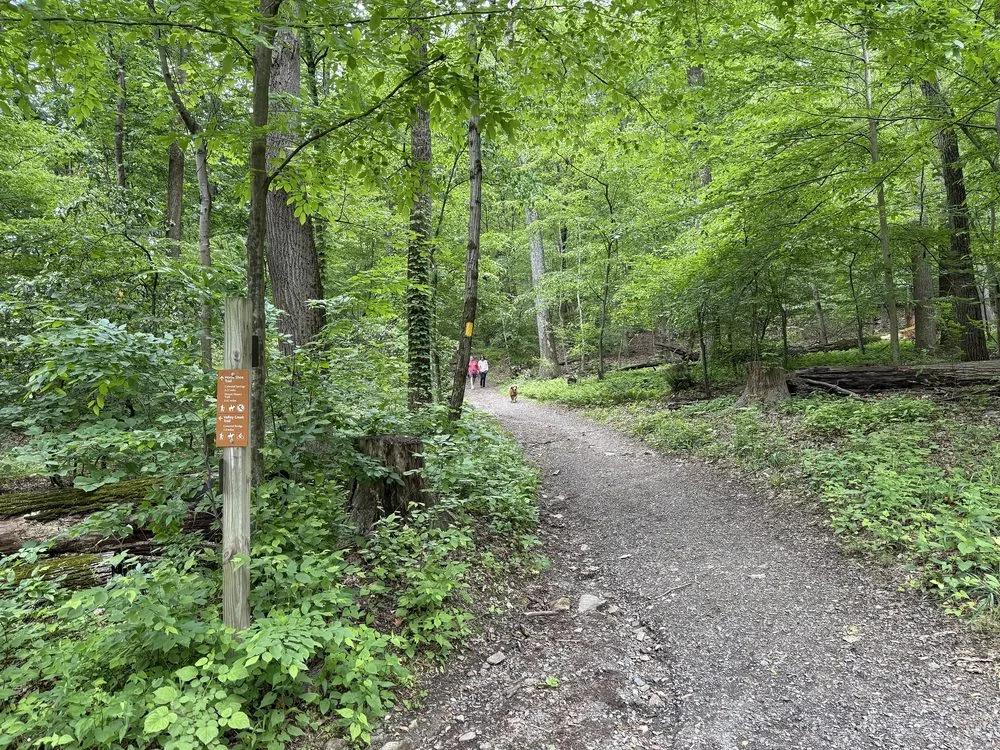
Walk outside, even around the block. Notice the ground under each step.
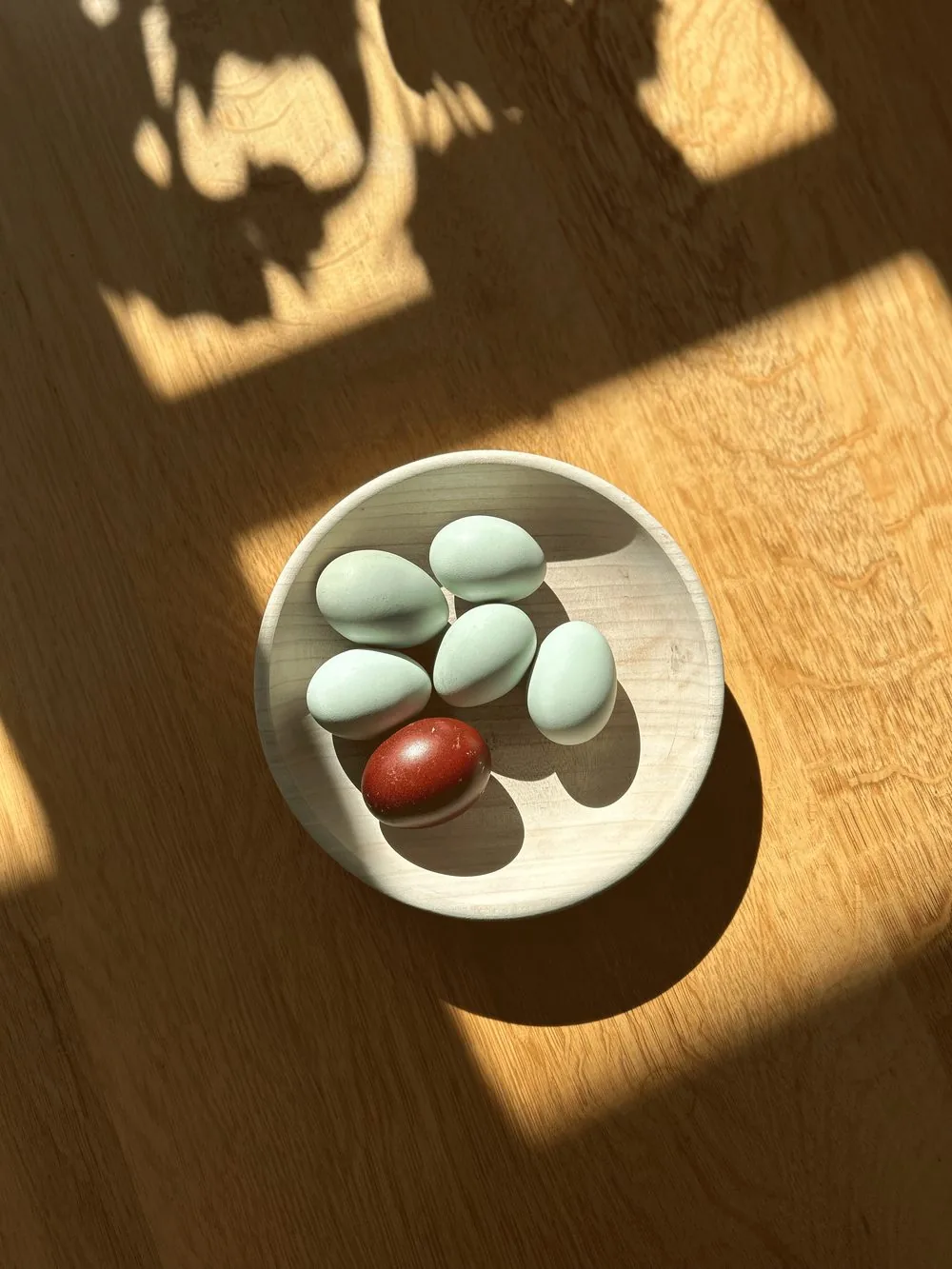
Take one breath of thanks before a meal, in your own words or a blessing from your tradition.

A pot of herbs on a windowsill keeps living soil within reach.
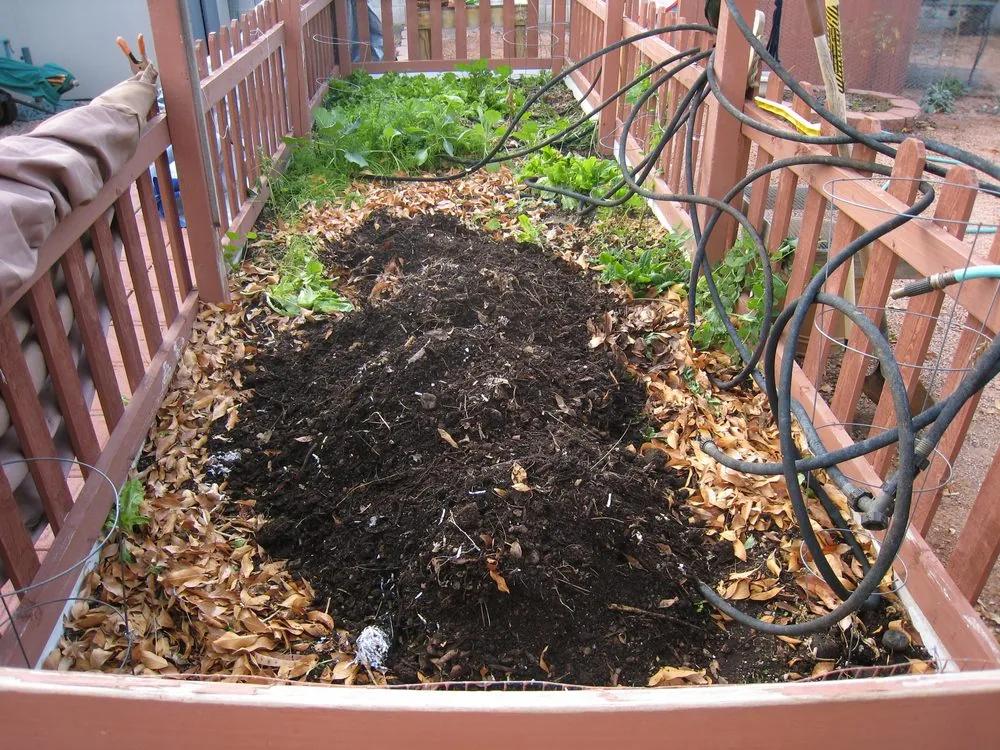
Compost what you can, and close the circle from plate back to ground.
Connecting with Earth doesn't require land or a garden. Just a moment of attention.
Across cultures, people pause before eating to give thanks. Here are a few of the words people use.
Jewish tradition (HaMotzi)
Baruch atah Adonai, Eloheinu melech ha'olam, hamotzi lechem min ha'aretz.
“Blessed are You, Lord our God, Ruler of the universe, who brings forth bread from the earth.”
Christian tradition (grace)
“Bless us, O Lord, and these Thy gifts, which we are about to receive from Thy bounty.”
Islamic tradition
Bismillah.
“In the name of God.”
Japanese tradition
Itadakimasu.
“I humbly receive.” Said with hands together, in thanks to everyone and everything that made the meal possible.
Buddhist tradition
Many Buddhist communities recite contemplations before eating that begin by recognizing food as a gift of the earth, the sky, many living beings and much hard work.
Your own words
“Thank you to the soil, the rain, the sun and every hand that brought this food to me.”
Whatever words you use, the pause itself is the practice.
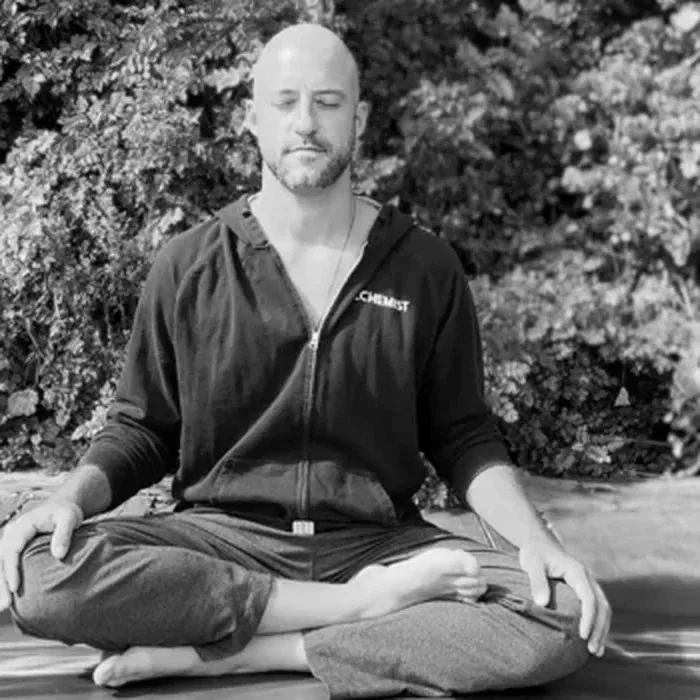
Practice with Erik
EARTH / NOURISH
You've explored the meaning, science and everyday practice of Earth. Now take the next step with Erik Casano. Private sessions are available in person in Agoura Hills or online, with an optional focus on Earth or any of the five elements.
Tell us a little about what you're looking for, and our team will follow up.
Earth Course: Coming Later
A dedicated Earth course with Erik Casano is planned. Details will be added when the course is ready.
Elements
Earth is one part of a greater whole.
Each of the five elements offers a different way to connect with yourself and the world around you. Continue your exploration through the other four.
Water
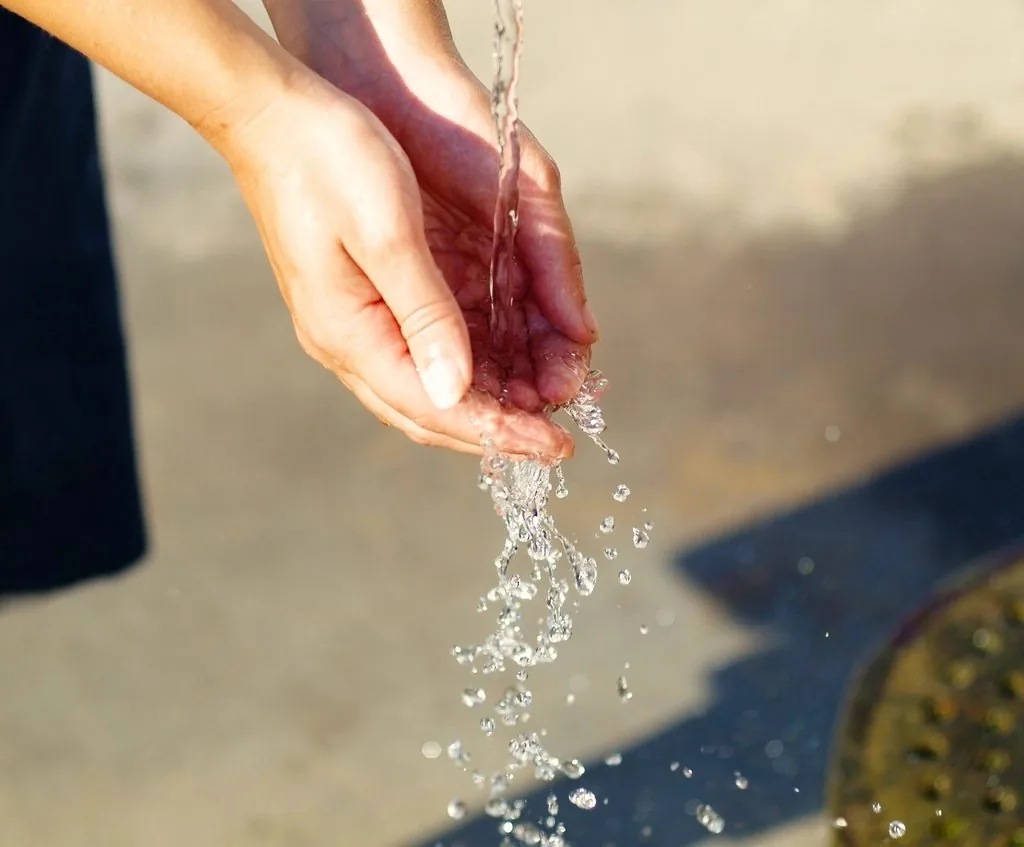
Explore water, bathing and purification in everyday life.

Fire
Discover the power of observation through light, warmth and fire contemplation.

Air
Discover the breath, Leonard Orr's connected breathing and the anatomy of one breath.

Ether
Explore the inner world through dreams, attention and imagination.
Every element offers a different path. Discover the one that speaks to you.
Resources
Explore, download and share the knowledge behind the Earth element.
Knowledge grows when it's shared. Explore our original educational resources, discover the research behind them, and bring these materials into your own learning, teaching or creative work.
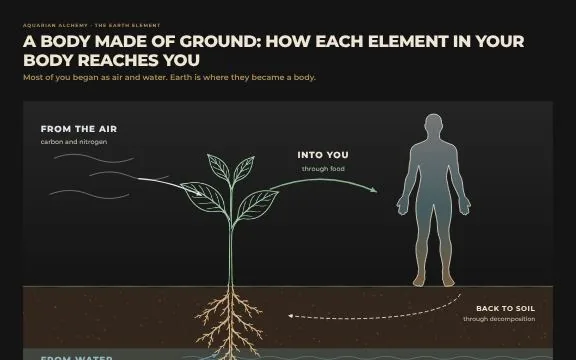
See how the elements in your body reach you from the air, water and rock, through soil and food.
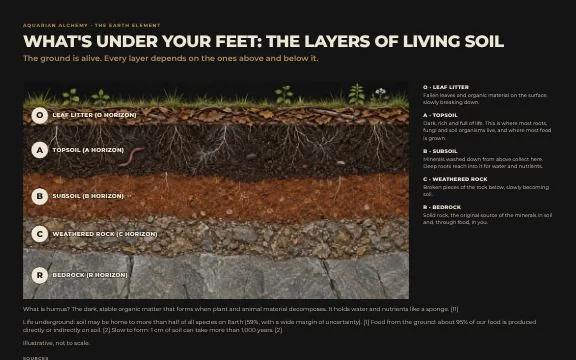
Explore the layers of living soil, from leaf litter to bedrock, and why each one matters.
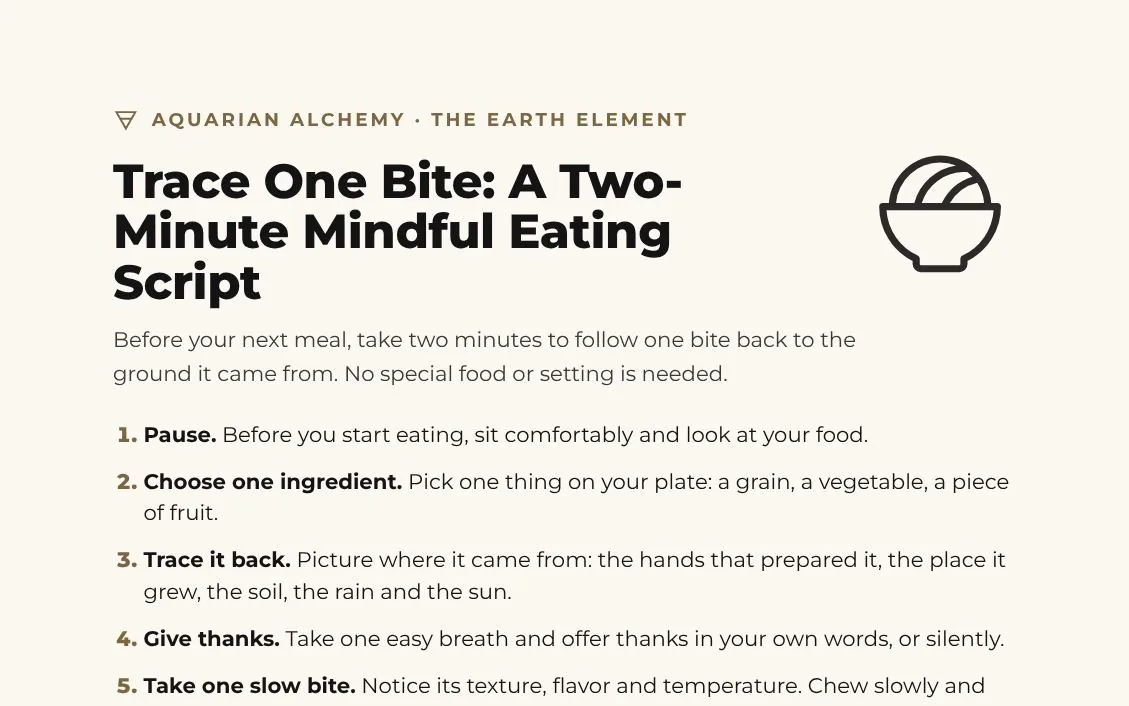
A printable two-minute mindful eating script for classrooms, workshops and kitchen tables.
Explore the original research, historical references and creator credits behind each resource. We believe understanding where knowledge comes from is an important part of learning.
Picture credits