Yazd, Iran
At the Zoroastrian fire temple in Yazd, tradition holds that the sacred fire has burned since about 470 CE. Zoroastrians don't worship fire; it is a focus for prayer.

The Fire element
Fire: the element that holds your gaze.
For hundreds of thousands of years, people have gathered around fire and watched it. Reconnecting begins with a single flame and a few quiet minutes.
Meaning
Fire represents light, warmth and transformation. It is one of the five elements Aquarian Alchemy invites you to reconnect with through everyday practice, and its action is to contemplate: to look closely, and let attention settle.
In classical philosophy and alchemy, Fire is a symbolic element. Scientifically, fire is not a substance at all. It is a process: a chemical reaction between fuel and oxygen that releases heat and light.
Across cultures, fire has stood for light in darkness, warmth and home, purification, passion and change. It is the only element that consumes what it touches and turns it into something new.
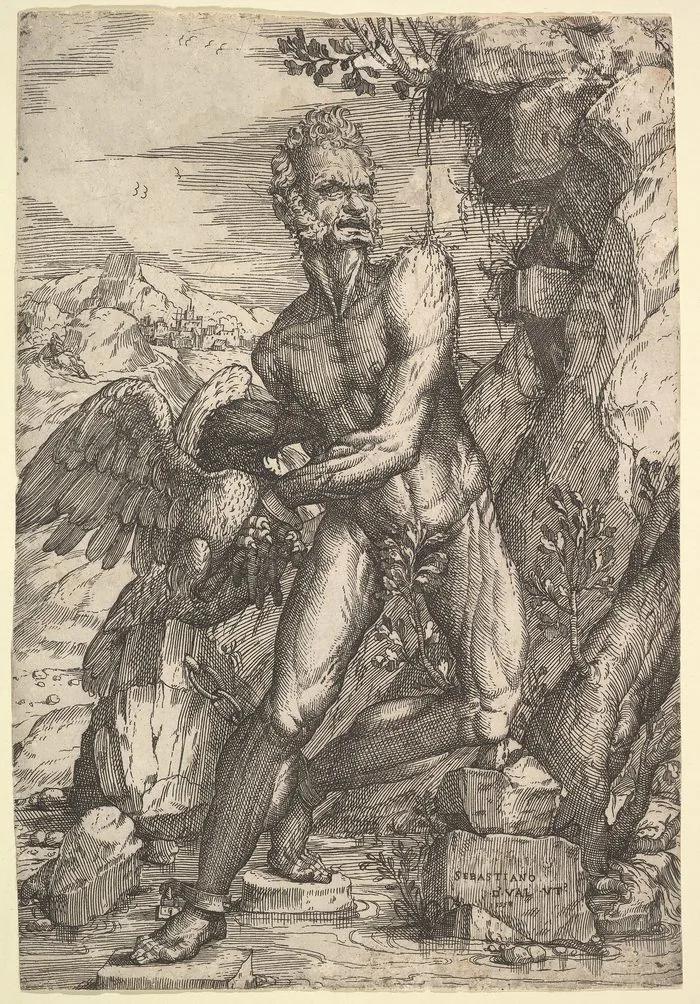
Prometheus · Sebastiano de Valentinis · CC0
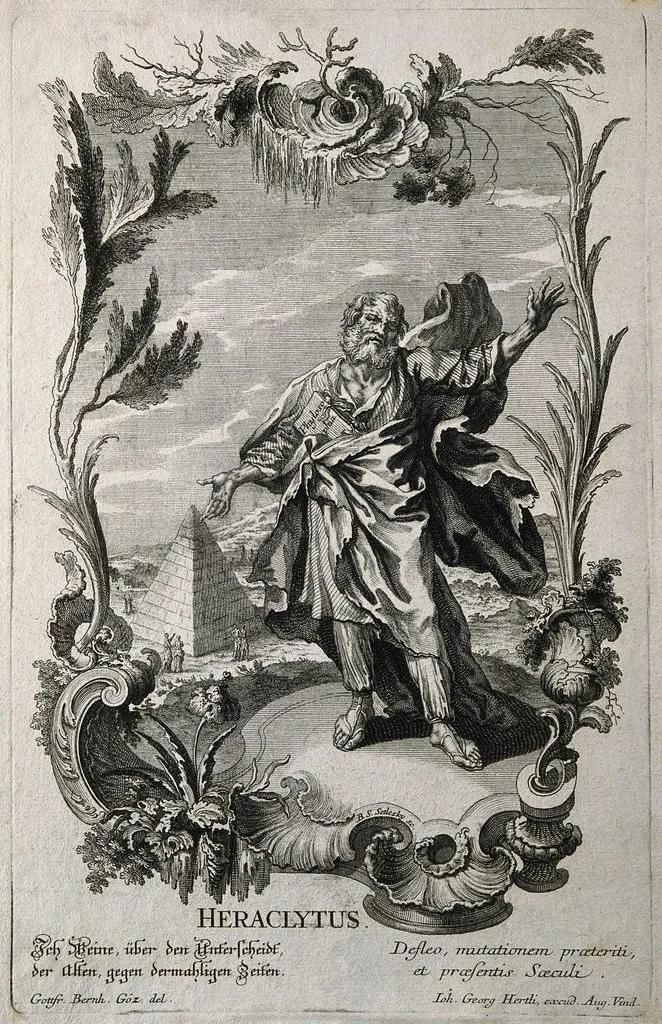
Fire is one of four classical elements, alongside Earth, Water and Air. The philosopher Heraclitus described the whole cosmos as “an ever-living fire.”
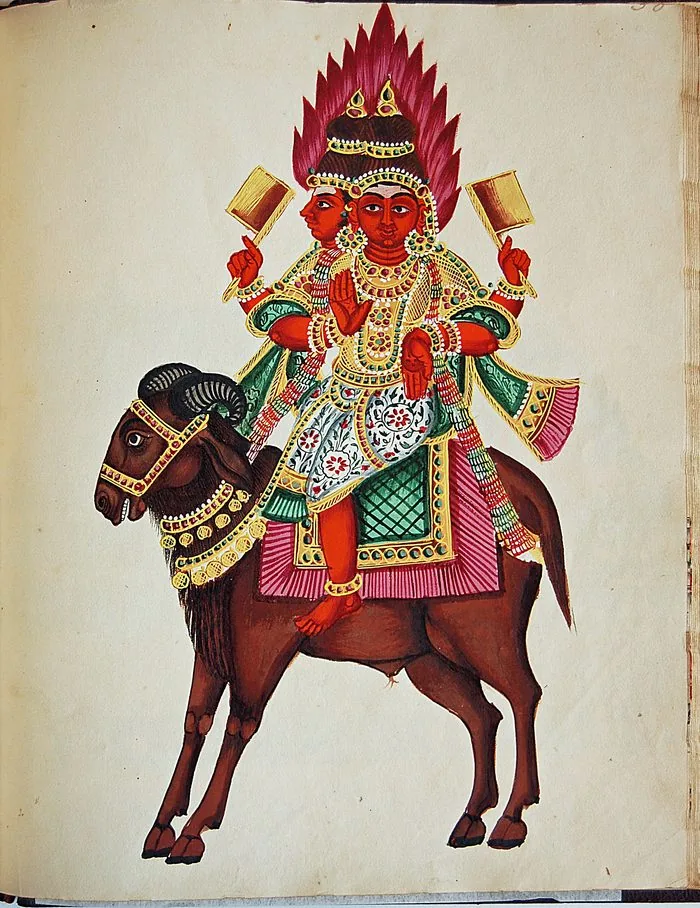
Agni, god of fire · Indian painting · public domain
Fire is agni. In yoga it is linked to the navel chakra, manipura, and in Ayurveda it forms pitta, the quality of digestion and transformation.
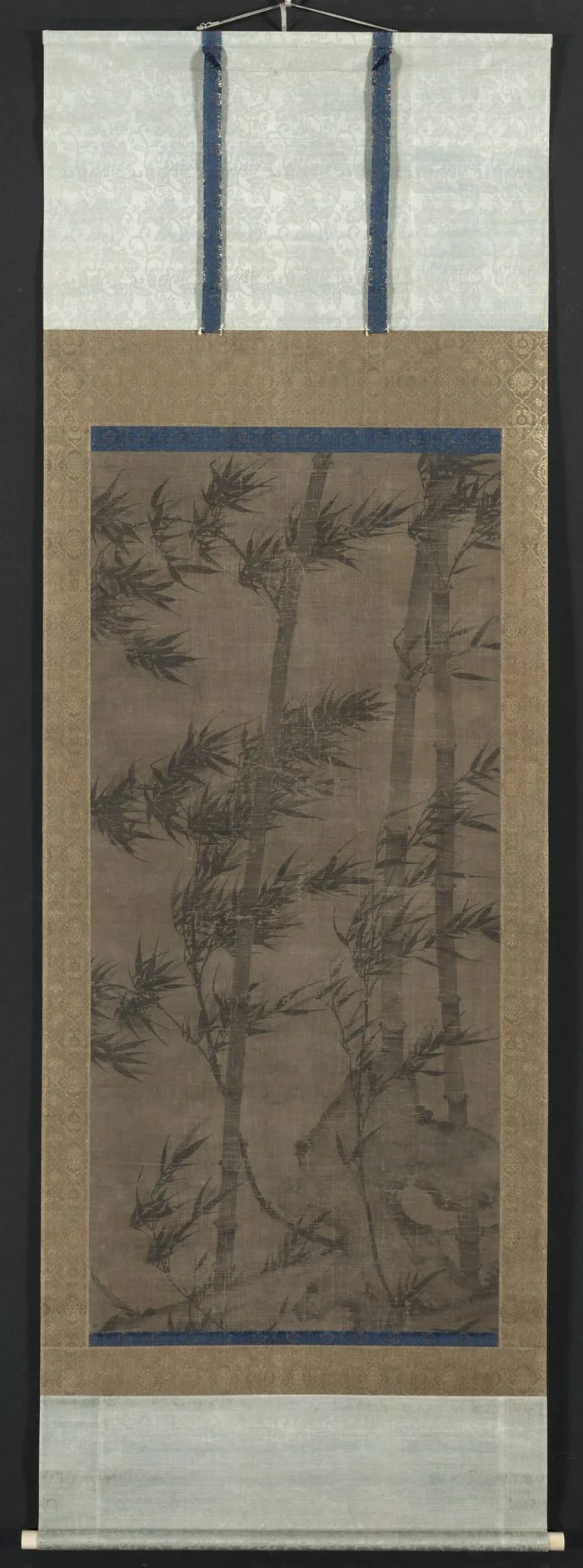
Bamboo in Four Seasons: Summer · anonymous · CC0
In wuxing, Fire is one of five phases of change, associated with summer, the color red and the heart.
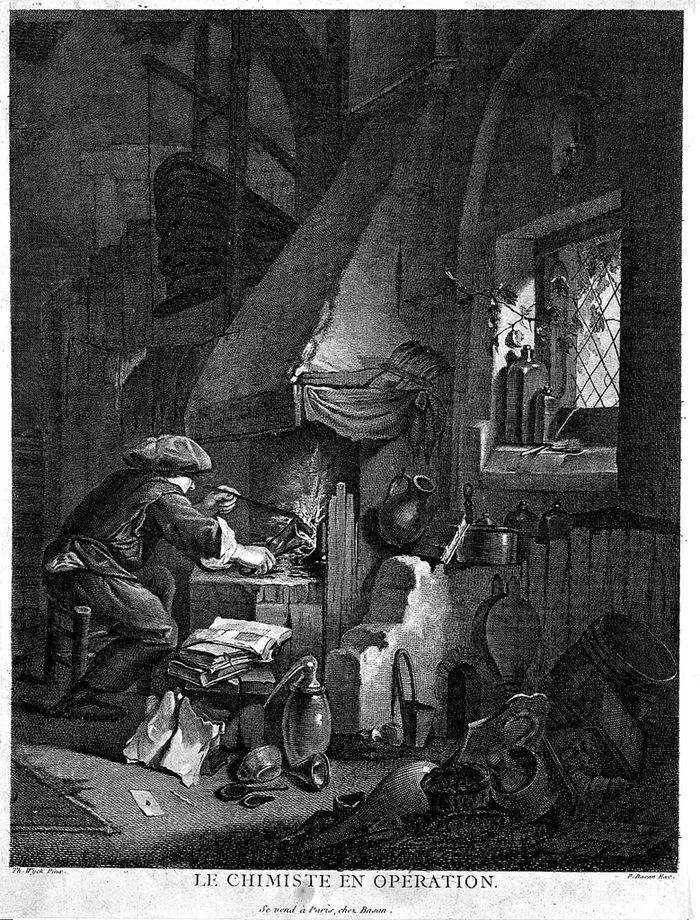
The alchemist at his furnace · engraving · CC0
The Fire element symbol is an upward-pointing triangle, like a rising flame.
Leonard Orr
Time spent with an open flame.
Leonard Orr, who developed Rebirthing Breathwork, taught spiritual purification through earth, air, water and fire. He wrote that fire purification means knowing how much time to spend with an open flame, and some say he called it the least appreciated element.
Orr traced this practice to Haidakhan Babaji, the Indian teacher whose day began with a fire ceremony at a dhuni, a sacred fire pit. Orr later gathered his teaching on fire in The Fire Book.
Haidakhan Babaji
The day began with a fire ceremony at a dhuni, a sacred fire pit.Source: Haidakhandi Samaj
Leonard Orr
Purification with fire: knowing how much time to spend with an open flame.Source: Orr interviews; Leonard D. Orr Foundation
Erik Casano
Contemplation by the fire, with a question.Source: Erik Casano
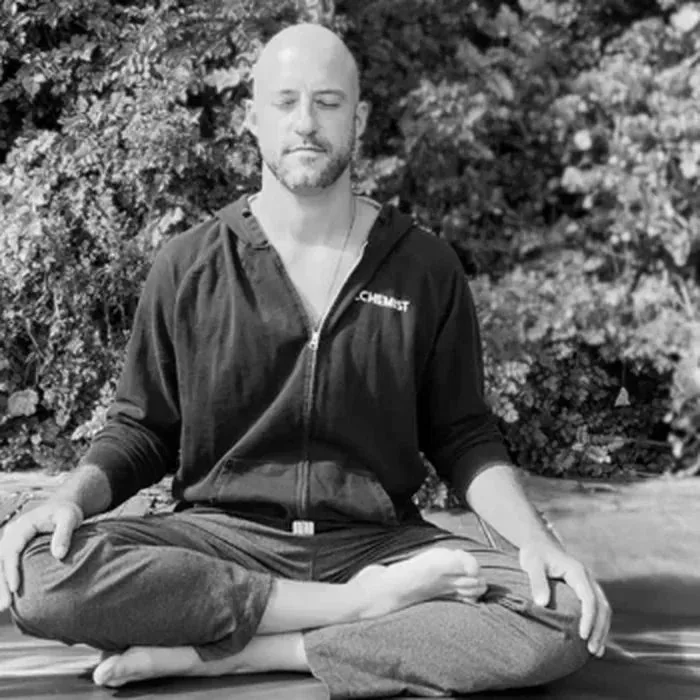
Erik Casano trained in 5 Elements Breathwork at Haidakhan, where the fire ceremony is still at the center of daily practice. He sits beside a fire whose warmth he can feel and brings a question to it. When his attention drifts, he gently repeats a phrase to return. For Erik, images and insights can arise in the stillness, and he connects Fire with the Creator. These are his personal experiences and beliefs.
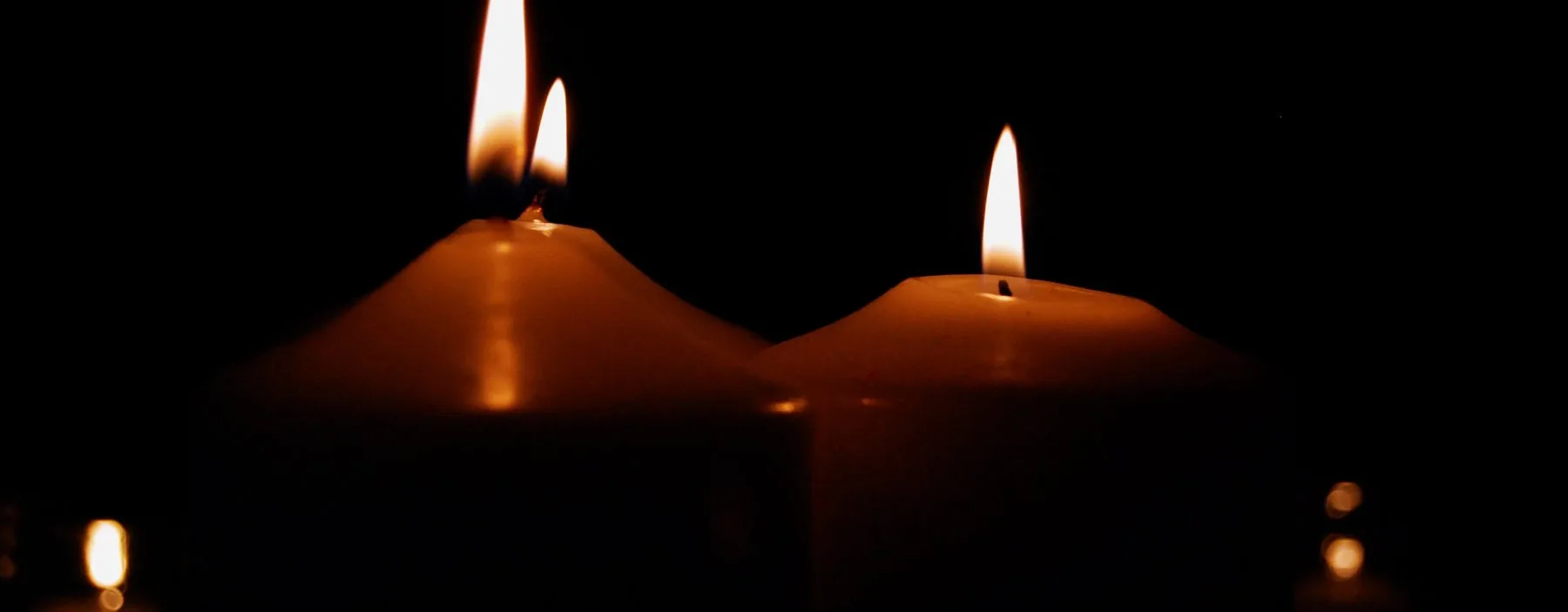
Try it
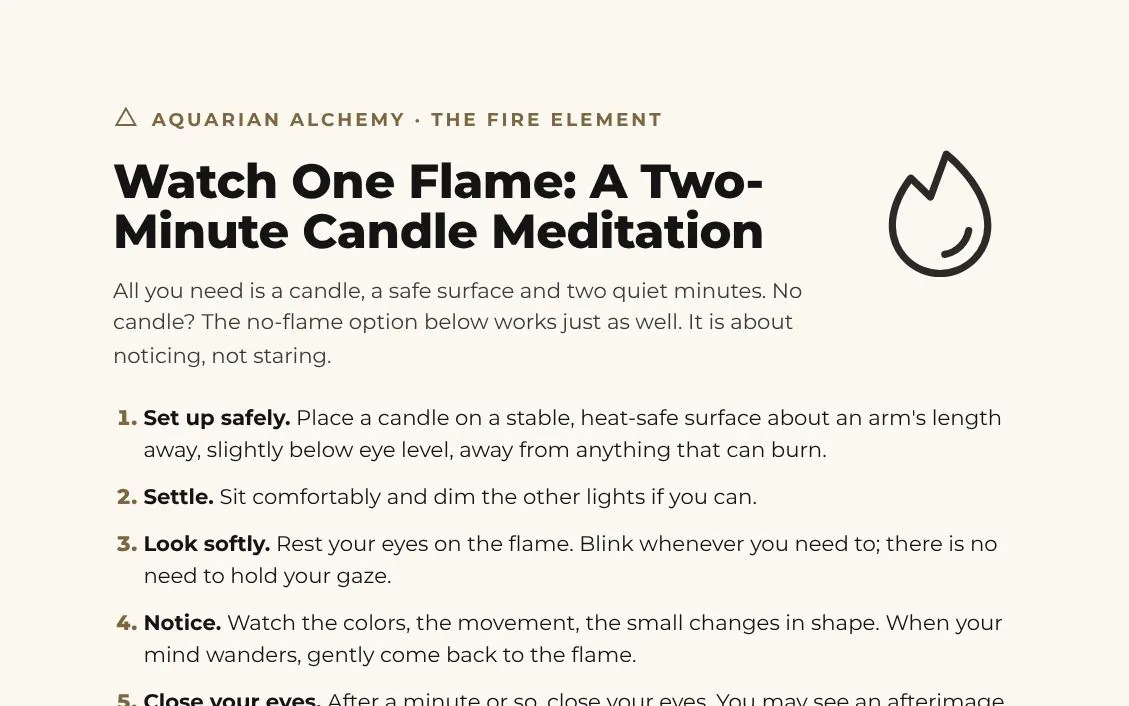
A two-minute candle contemplation.
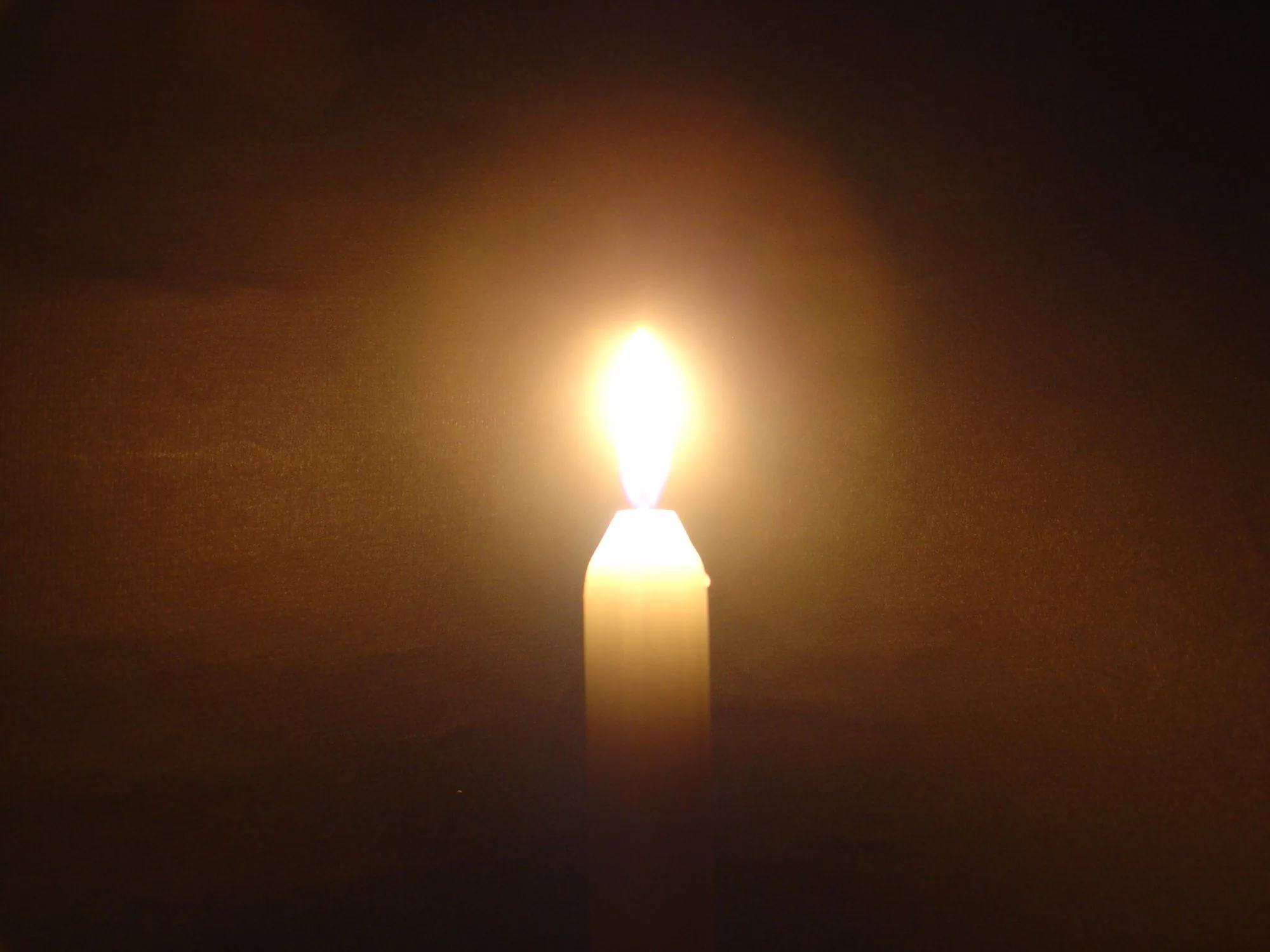
All you need is a candle, a safe surface and two quiet minutes. No candle? The no-flame option below works just as well.
This short practice is a gentle version of an old idea: resting your attention on one point of light. It is about noticing, not staring.
No-flame option: Watch a sunrise or sunset, a lamp's glow, or a video of a fireplace. The practice is the same: look softly, notice, return.
0:00
of 2:00
The flame
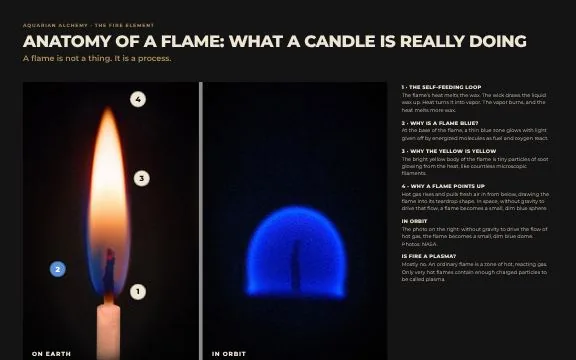
A flame is not a thing. It is a process.
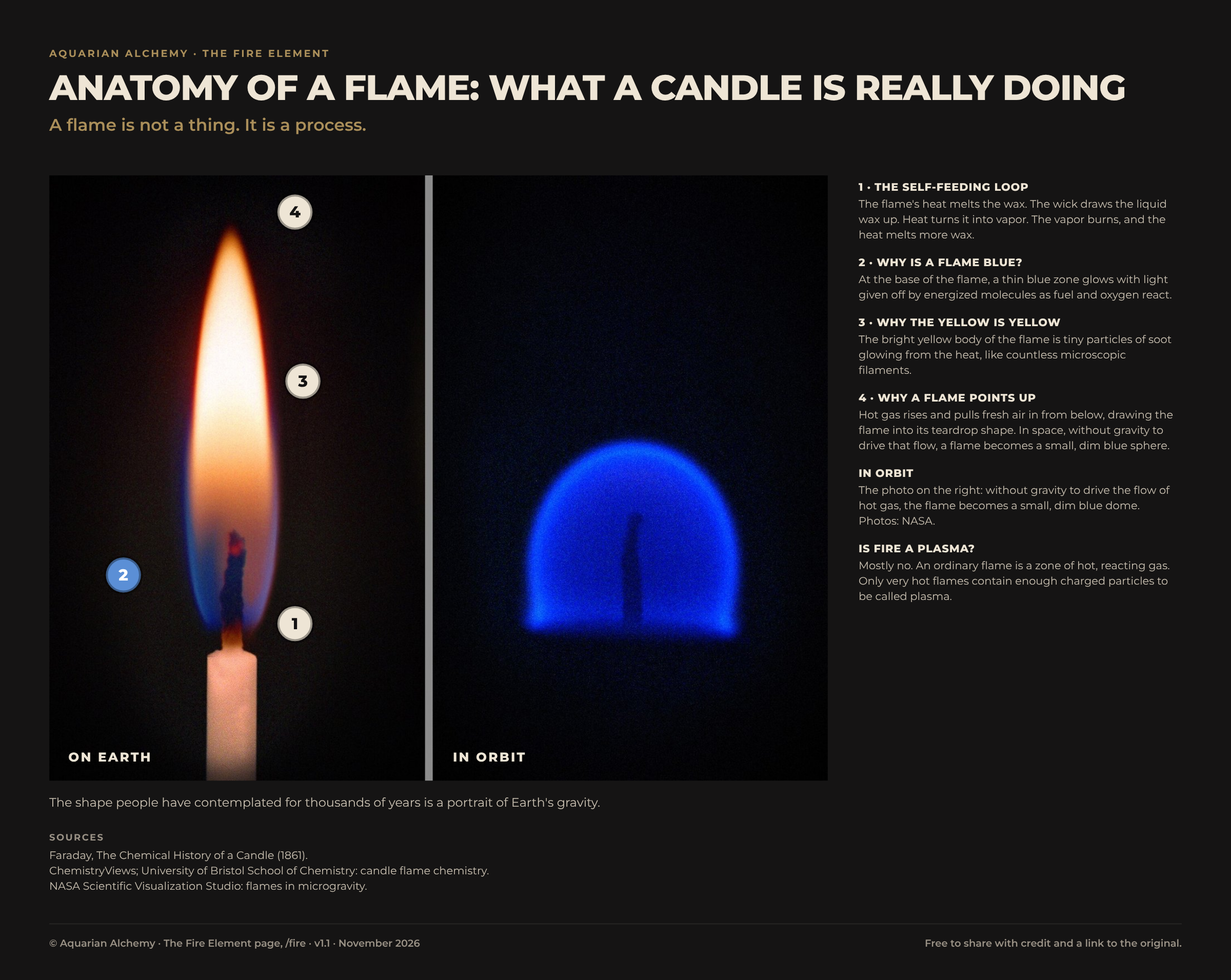
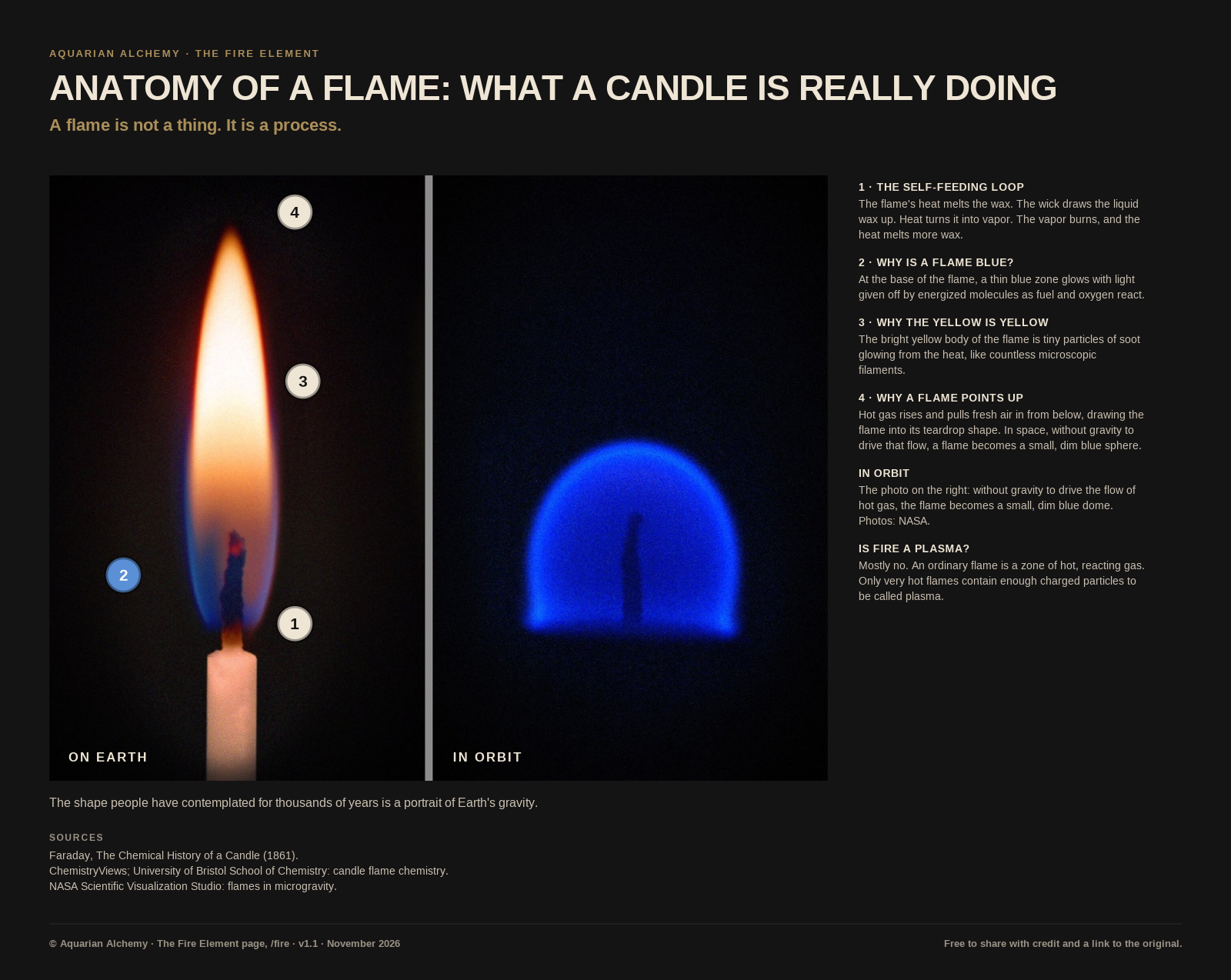
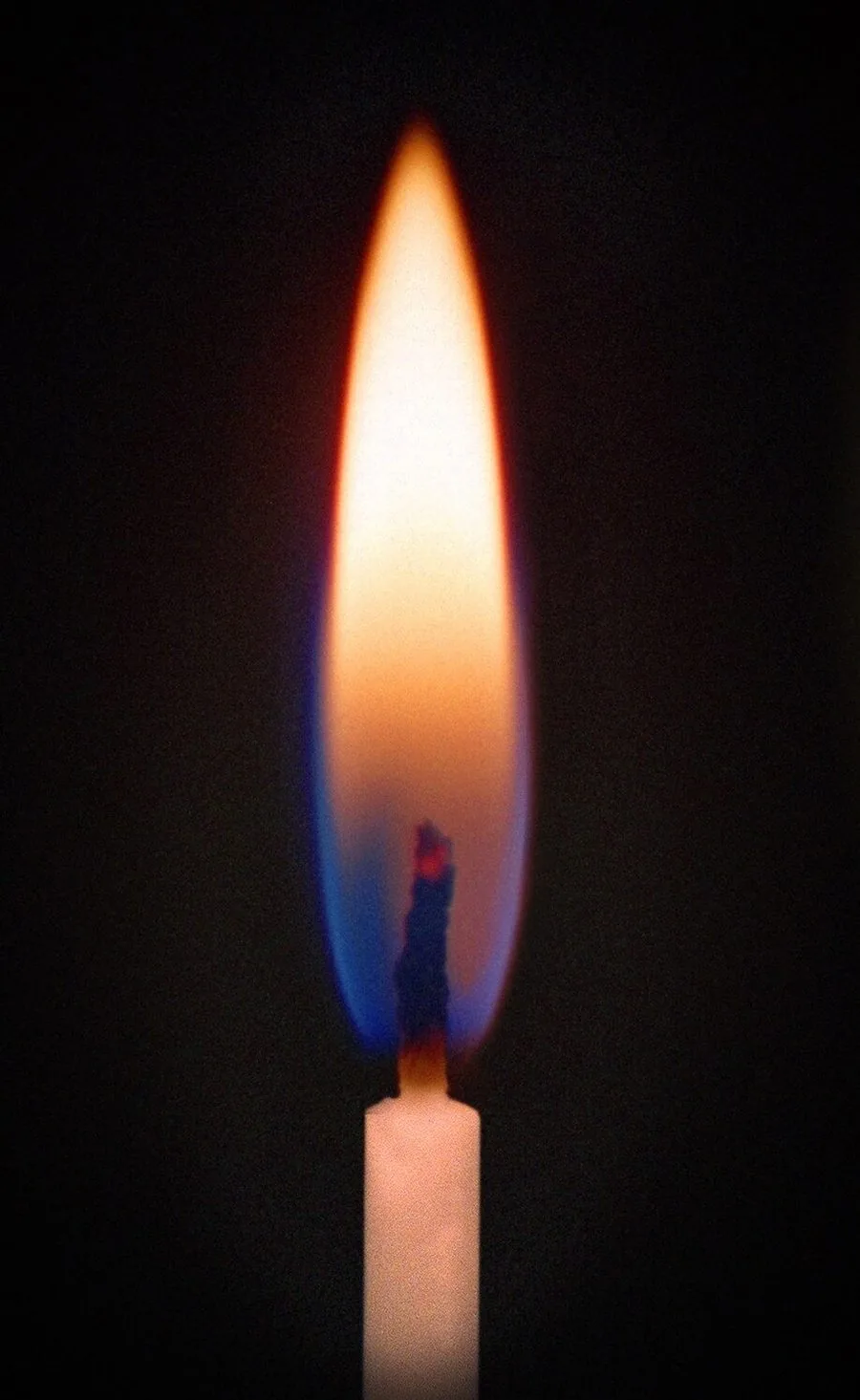
Fire is a process of combustion, a chemical reaction between a fuel and oxygen. It is not a substance. A candle flame looks simple, but it is a small, self-feeding machine. Here is what you are actually watching.
Anatomy of a Flame: What a Candle Is Really Doing
 43
21
On Earth
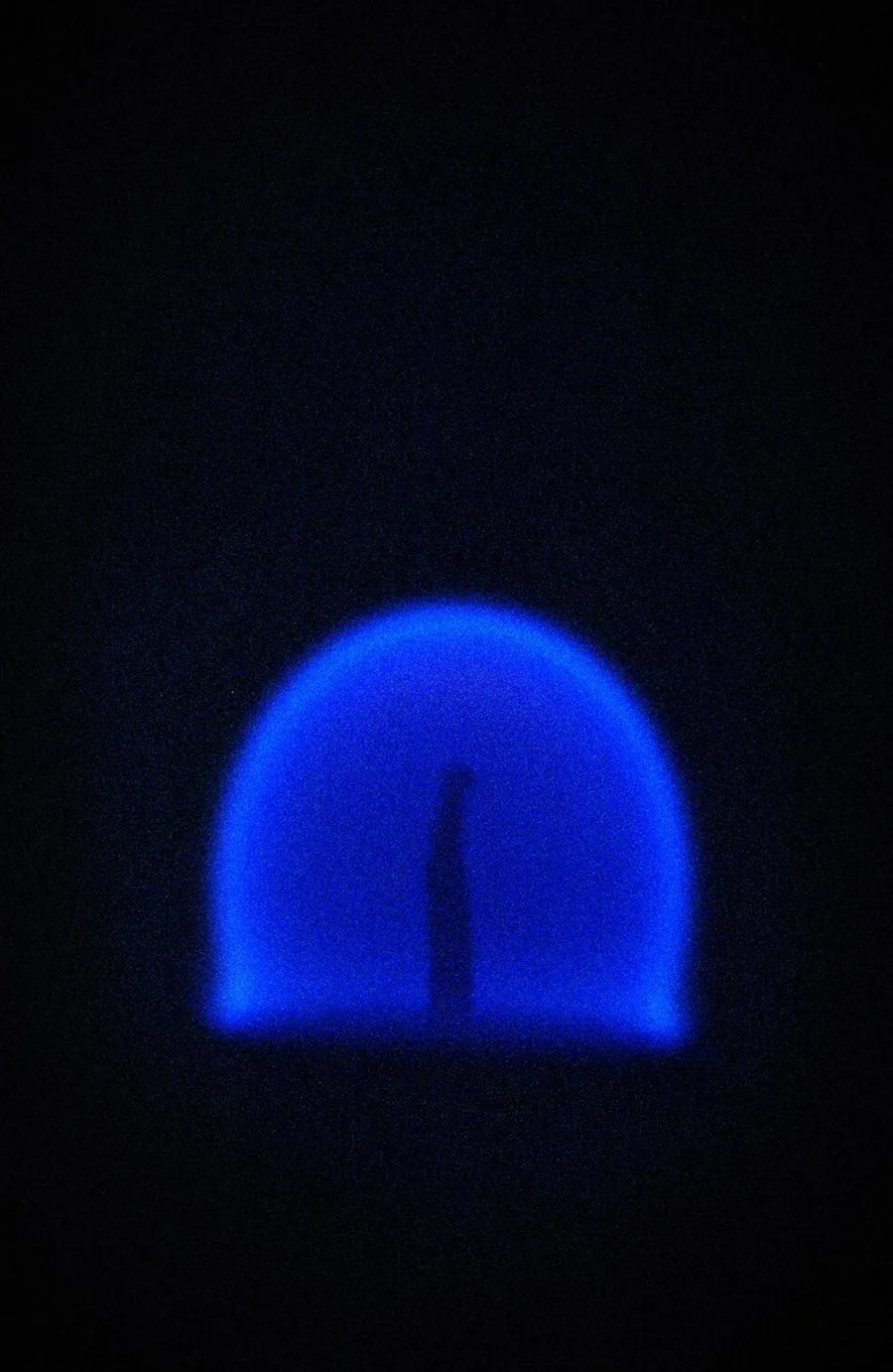 In orbit
1The self-feeding loop
Not to scale. No temperatures are shown: sources disagree on which zone is hottest. Photos: NASA, a candle burning on Earth and in microgravity.
At the base of the flame, a thin blue zone glows with light given off by energized molecules as fuel and oxygen react. [1]
The bright yellow body of the flame is tiny particles of soot glowing from the heat, like countless microscopic filaments. [1]
Hot gas rises and pulls fresh air in from below, drawing the flame into its teardrop shape. In space, without gravity to drive that flow, a flame becomes a small, dim blue sphere. [2]
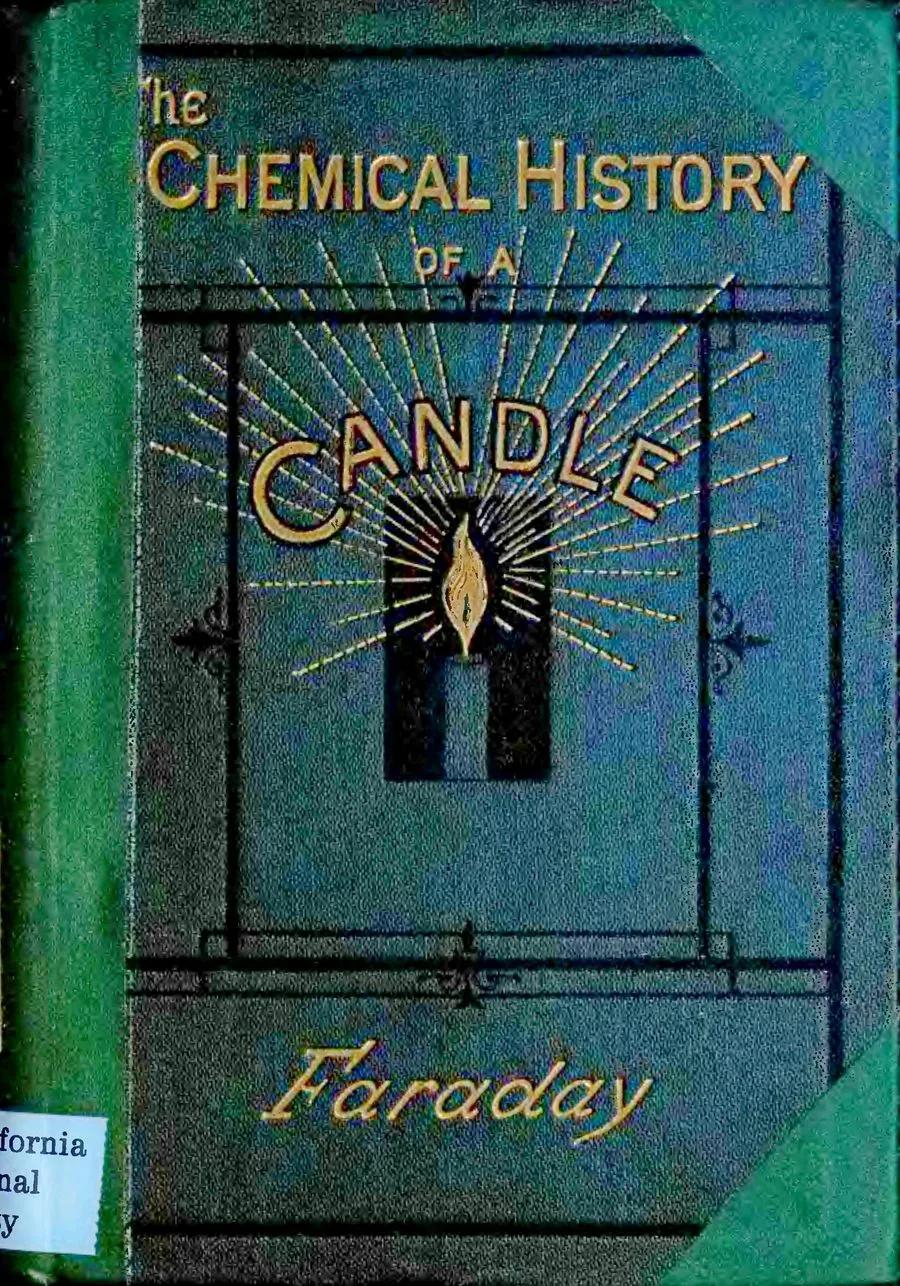
The Chemical History of a Candle · Michael Faraday, 1861 · public domain
Mostly no. An ordinary flame is a zone of hot, reacting gas. Only very hot flames contain enough charged particles to be called plasma.
The shape people have contemplated for thousands of years is a portrait of Earth's gravity.
Field guide
One flame. Many reasons to watch it.
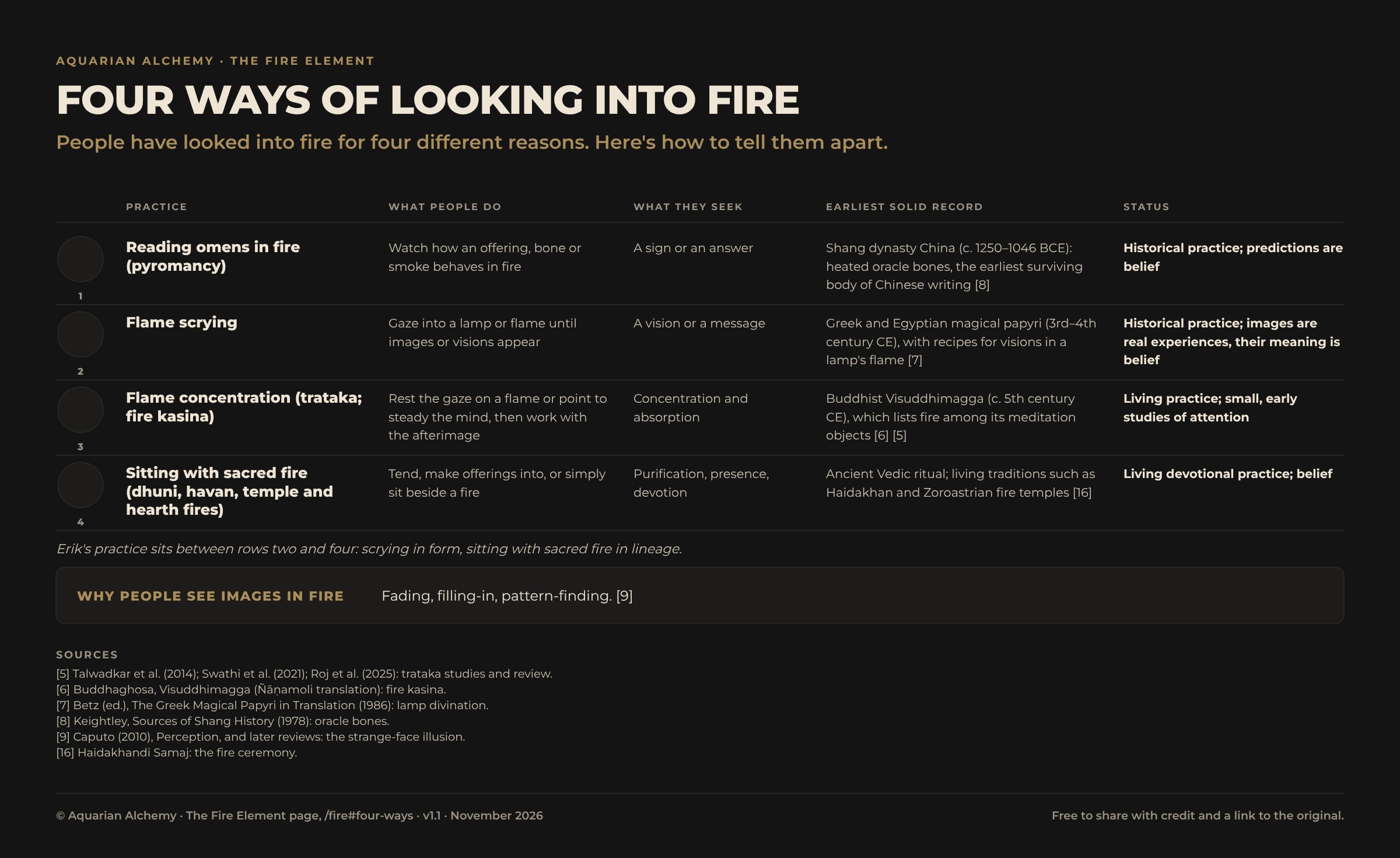
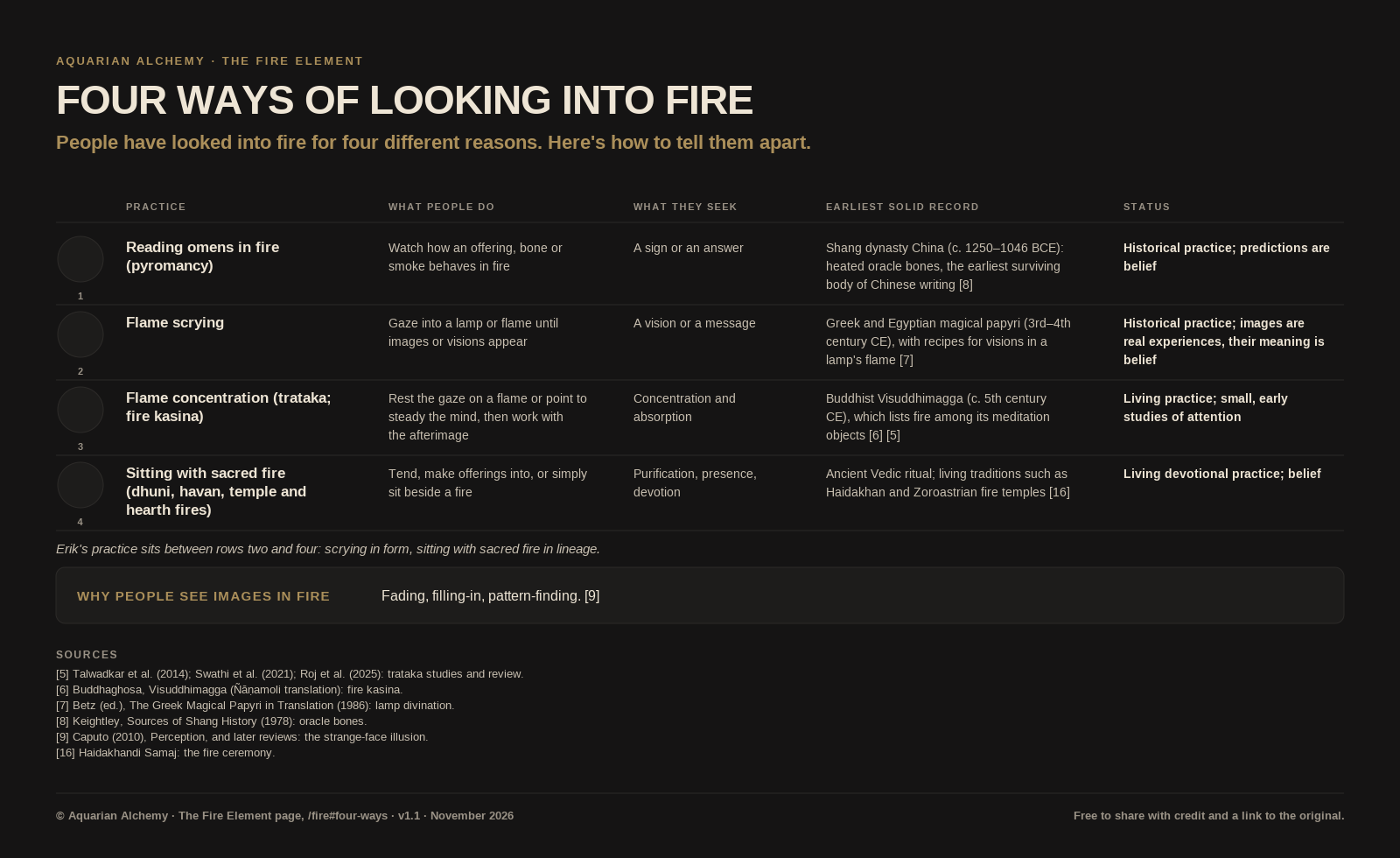
Popular articles often treat every kind of fire-gazing as the same practice. They aren't. Across history, people have looked into fire for four different reasons, with different methods and goals.
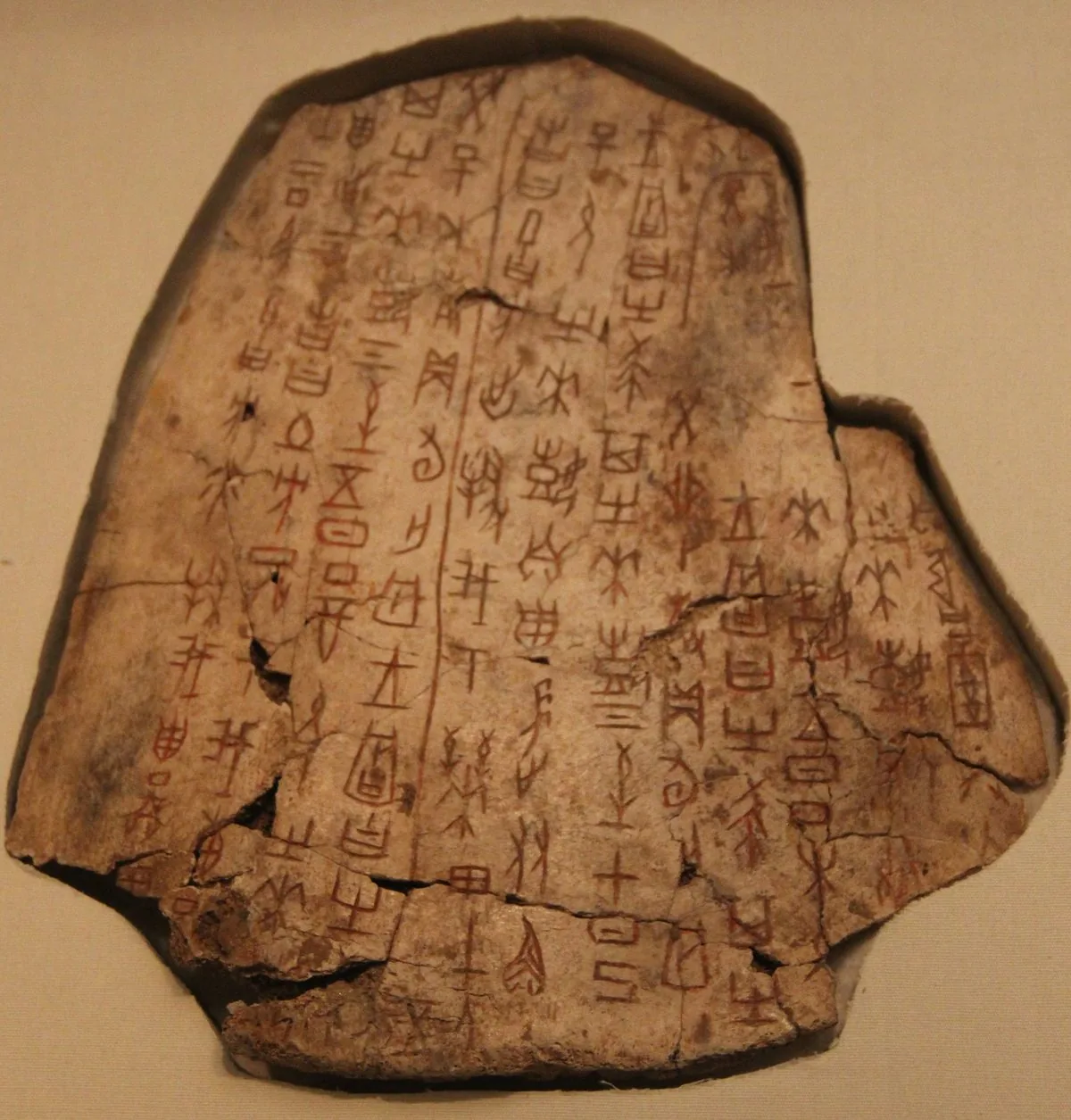
Shang inscribed ox scapula, for divination · Gary Todd · CC0
Four Ways of Looking Into Fire
| # | Practice | What people do | What they seek | Earliest solid record | Status |
|---|---|---|---|---|---|
| 1 | Reading omens in fire (pyromancy) | What people doWatch how an offering, bone or smoke behaves in fire | What they seekA sign or an answer | Earliest solid recordShang dynasty China (c. 1250–1046 BCE): heated oracle bones, the earliest surviving body of Chinese writing [8] | StatusHistorical practice; predictions are belief |
| 2 | Flame scrying | What people doGaze into a lamp or flame until images or visions appear | What they seekA vision or a message | Earliest solid recordGreek and Egyptian magical papyri (3rd–4th century CE), with recipes for visions in a lamp's flame [7] | StatusHistorical practice; images are real experiences, their meaning is belief |
| 3 | Flame concentration (trataka; fire kasina) | What people doRest the gaze on a flame or point to steady the mind, then work with the afterimage | What they seekConcentration and absorption | Earliest solid recordBuddhist Visuddhimagga (c. 5th century CE), which lists fire among its meditation objects [6] [5] | StatusLiving practice; small, early studies of attention |
| 4 | Sitting with sacred fire (dhuni, havan, temple and hearth fires) | What people doTend, make offerings into, or simply sit beside a fire | What they seekPurification, presence, devotion | Earliest solid recordAncient Vedic ritual; living traditions such as Haidakhan and Zoroastrian fire temples [16] | StatusLiving devotional practice; belief |
NoteErik's practice sits between rows two and four: scrying in form, sitting with sacred fire in lineage.
Scrying is the practice of gazing into a surface, such as a mirror, crystal, water or flame, until images appear. Fire scrying is one form of it. Its best-documented ancestor is lamp divination in Greek and Egyptian magical papyri, where practitioners asked for visions in a lamp's flame after sunset. [7]
When you hold your gaze steady in low light, your visual system starts to fill in. Unchanging details fade, and the brain finds patterns and faces in what remains. In one experiment, most people gazing at their own reflection in a dim mirror began seeing distortions and other faces within about a minute. No study has tested flames directly, but the same mechanisms are likely at work. Many practitioners value what they see the way they value a dream: as personally meaningful, not as information from outside. [9]
Story
The word for attention began at the fireside.
In Latin, focus meant the hearth: the fireplace at the center of the home. In the Romance languages it became the word for fire itself: French feu, Spanish fuego. In 1604, the astronomer Johannes Kepler borrowed focus for the point where a lens gathers light. Today we use it for attention. [14]
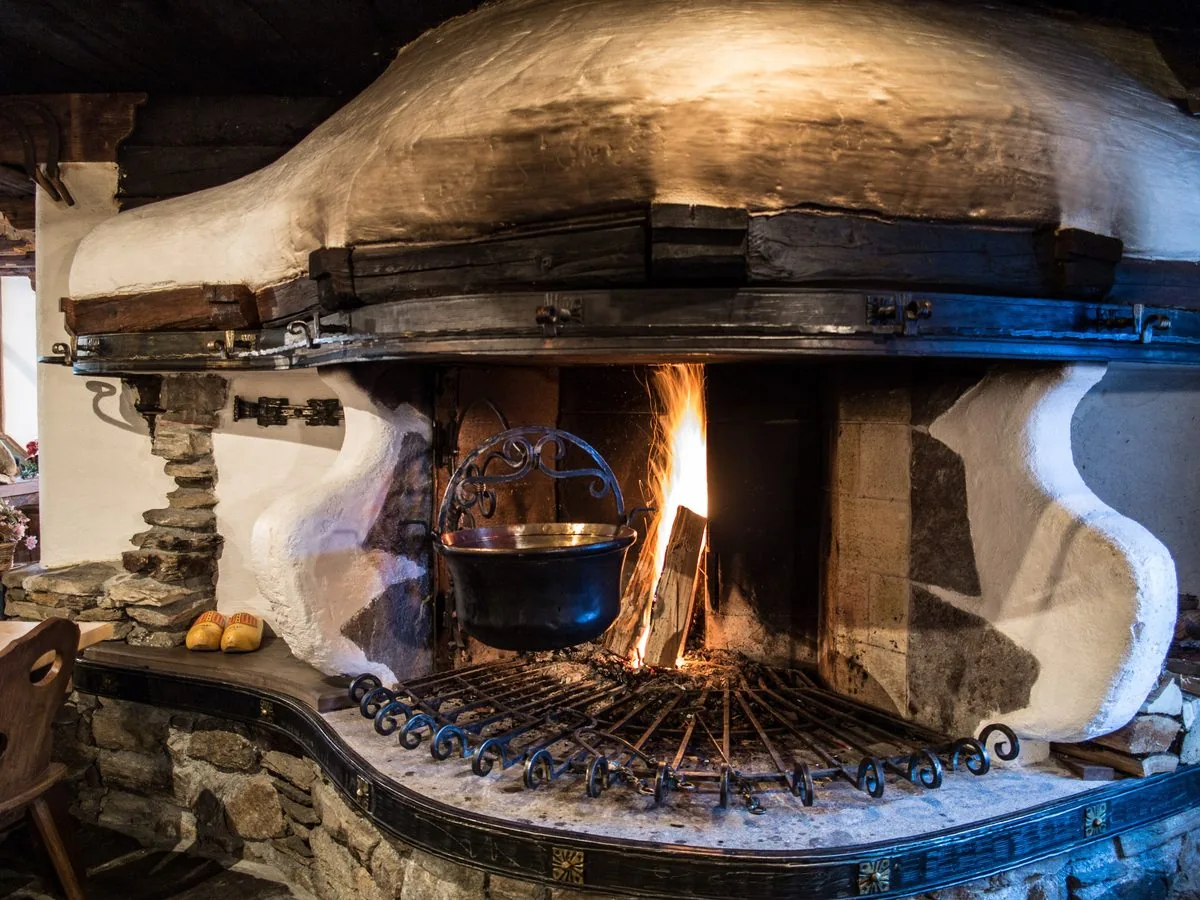
The oldest securely dated human fires are about a million years old. Deliberate fire-making has now been traced back about 400,000 years, to a site in Suffolk, England, where archaeologists found fire-cracked stone tools and pieces of pyrite for striking sparks. At Qesem Cave in Israel, a large hearth was rebuilt in the same spot again and again, about 300,000 years ago, with tools clustered around it. The researchers called it the focus of activity. [12] [13] [11]
In the 1970s, the anthropologist Polly Wiessner recorded conversations among the Ju/'hoansi people of Botswana and Namibia. During the day, talk centered on practical matters: food, work, and complaints that kept relationships in balance. In the evening, around the fire, the talk changed. People told stories, sang, danced and spoke of the wider world. The fire did not just extend the day. It created a different kind of time. [10]
One community's conversations can't tell us how all our ancestors lived. But they suggest something we may still recognize: when the fire is lit, attention turns inward and the stories begin.
Every time you watch a flame, you are sitting where human attention began.
Sources
Evidence
Understanding the difference between science and belief.
The physics of a flame is well understood. The effects of watching one are much less studied than most articles suggest. Here's what the evidence tells us.
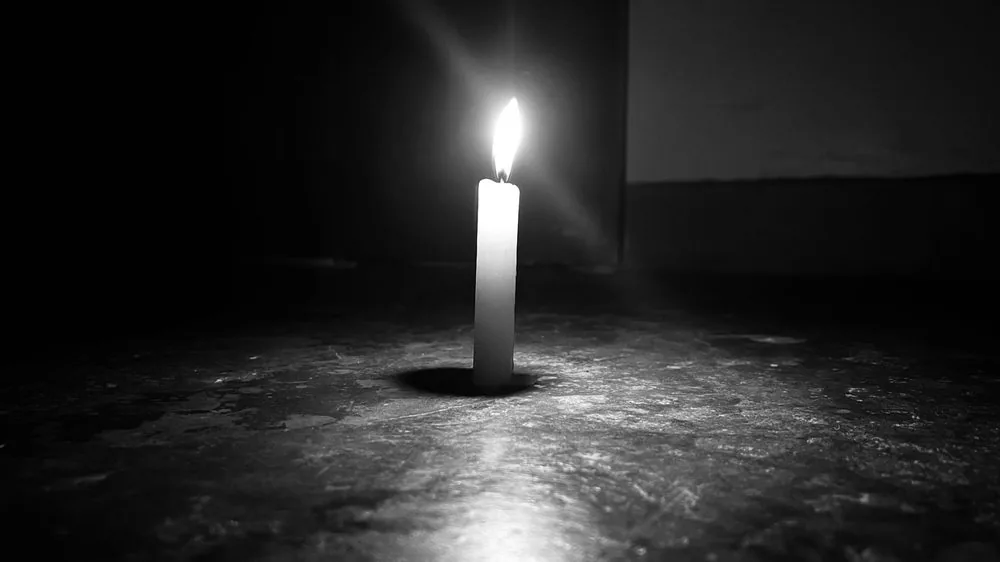
A candle flame is a self-sustaining chemical reaction. Its yellow light comes from glowing soot particles, and its shape comes from hot air rising.
In three experiments with 226 adults, watching a video of a fire with its crackling sound lowered blood pressure. Without the sound, the effect disappeared. The studies used video, not a real fire.
A few small studies of trataka, a yogic gazing practice, found short-term improvements in attention and memory tests. No study has compared a flame with any other object to look at.
Leonard Orr taught that sitting with fire purifies the mind and body. Erik believes a fire you can feel brings deeper insight. These are spiritual teachings and personal experience, not proven effects.
Sources
Daily Fire
Small moments to reconnect with light and warmth.
Most of us live by electric light and rarely see a real flame. Reconnecting with Fire can begin with a single candle or the sun going down.
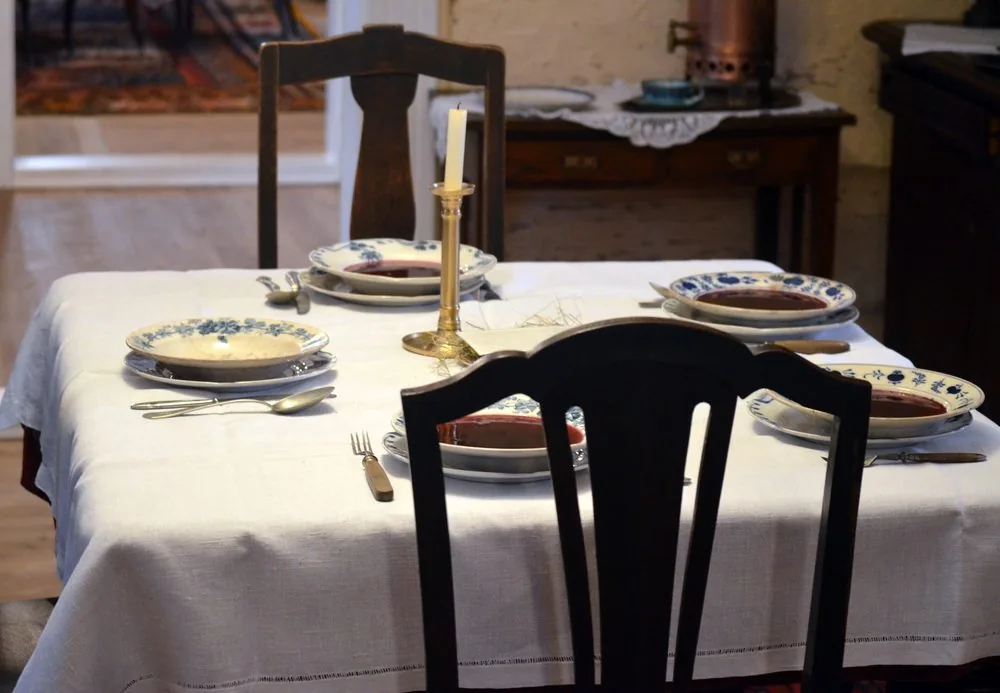
Let a single flame mark the end of the working day. Blow it out when you leave the table.
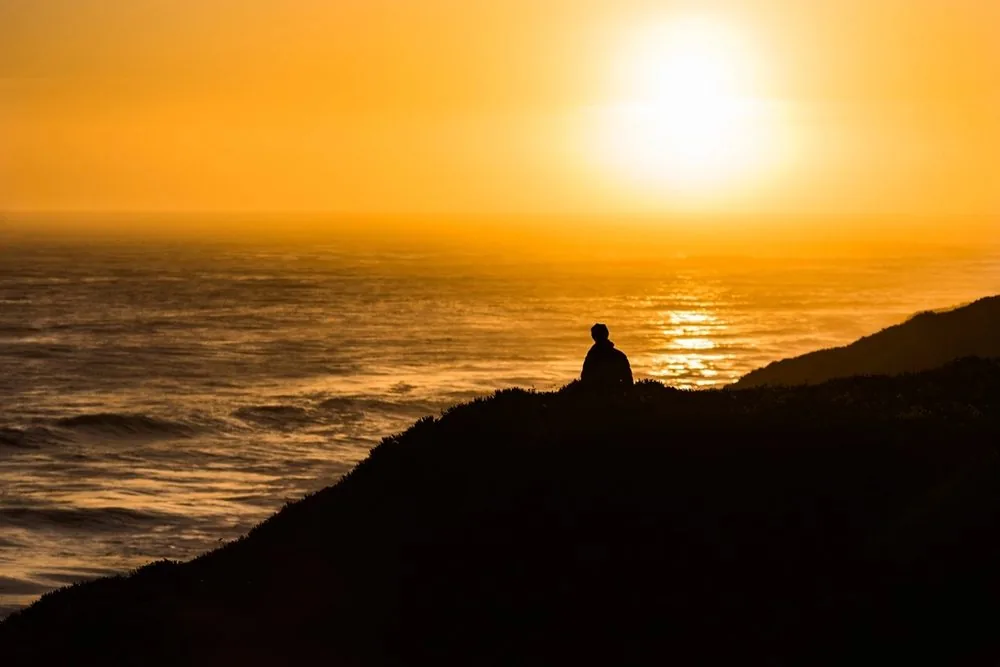
Sunset is the oldest fire-watching of all. Give it your full attention for two minutes.
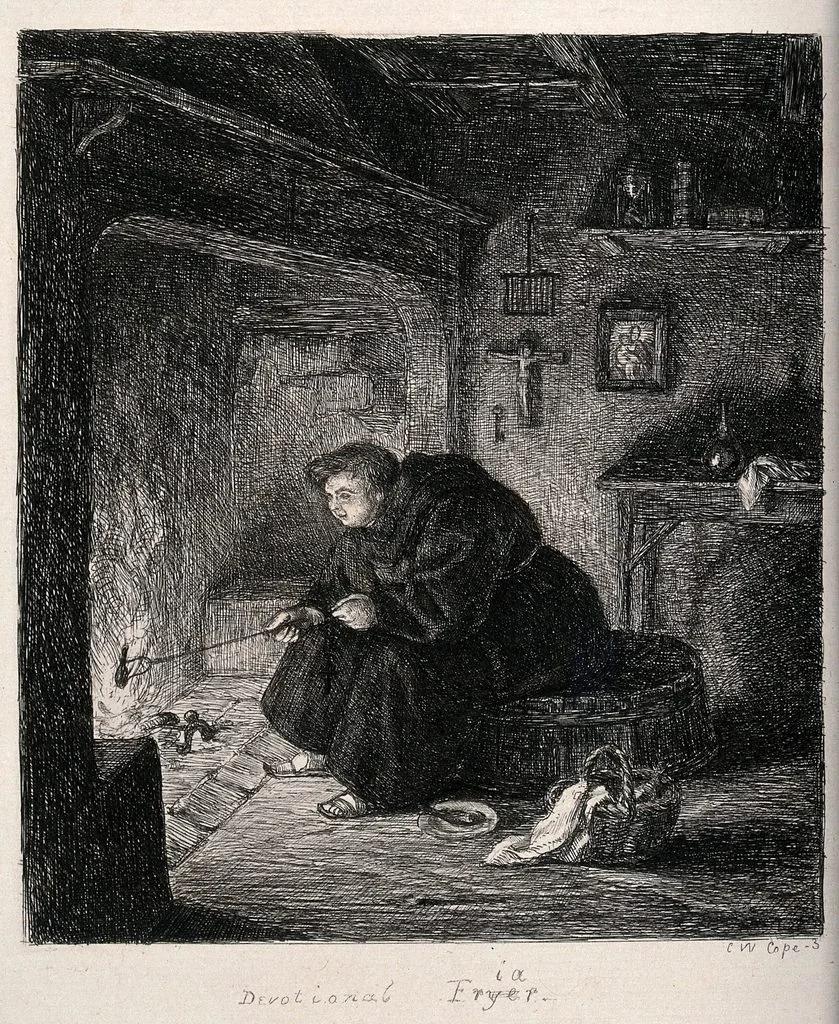
Sit by a fireplace or a safe outdoor fire with one question in mind. Let it rest there without forcing an answer.
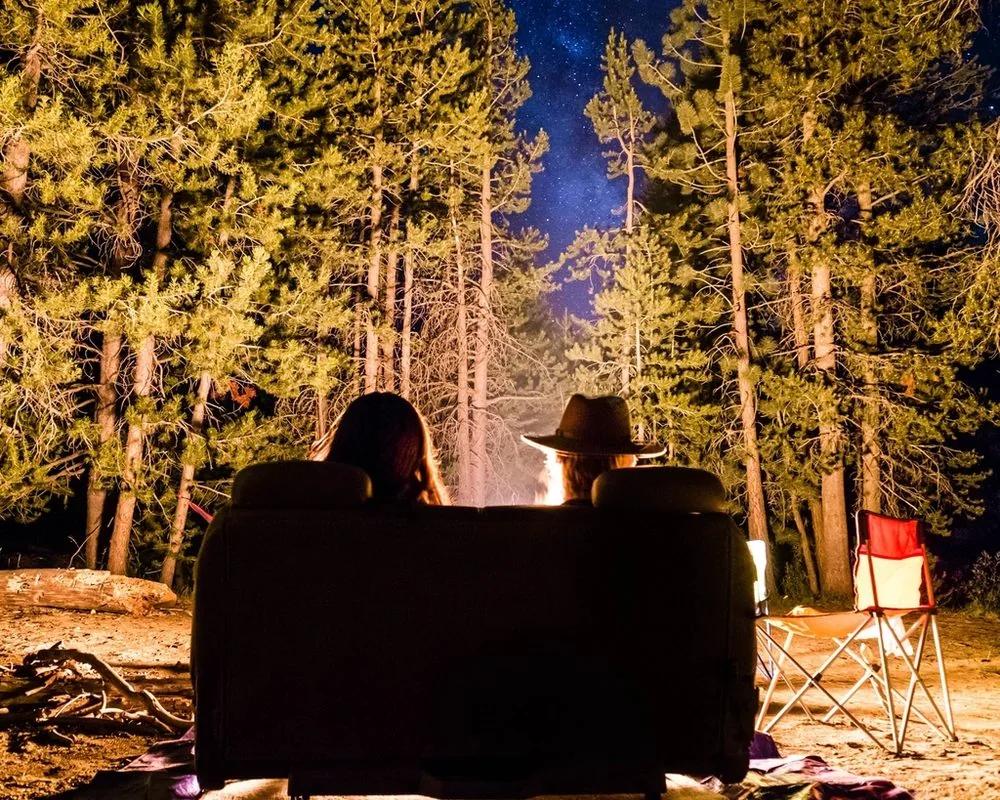
Gather people around a fire, put the phones away, and let the stories come.
Connecting with Fire doesn't require a ritual. Just a flame and a moment of attention.
For some communities, contemplating fire means keeping it alive.
At the Zoroastrian fire temple in Yazd, tradition holds that the sacred fire has burned since about 470 CE. Zoroastrians don't worship fire; it is a focus for prayer.
The sacred fire of Vesta was tended by the Vestal Virgins for centuries. If it went out, it had to be relit from the sun with a concave mirror.
In the 1180s, a visitor described nuns keeping a perpetual flame for St Brigid. A flame has been lit again in Kildare in modern times.
Practice with Erik
FIRE / CONTEMPLATE
You've explored the meaning, science and everyday practice of Fire. Now take the next step with Erik Casano. Private sessions are available in person in Agoura Hills or online, with an optional focus on Fire or any of the five elements.
Tell us a little about what you're looking for, and our team will follow up.
Fire Course: Coming Later
A dedicated Fire course with Erik Casano is planned. Details will be added when the course is ready.
Elements
Fire is one part of a greater whole.
Each of the five elements offers a different way to connect with yourself and the world around you. Continue your exploration through the other four.
Earth
Discover mindful nourishment and how the ground becomes you.
Water
Explore water, bathing and purification in everyday life.

Air
Discover the breath, Leonard Orr's connected breathing and the anatomy of one breath.
Ether
Explore the inner world through dreams, attention and imagination.
Every element offers a different path. Discover the one that speaks to you.
Resources
Explore, download and share the knowledge behind the Fire element.
Knowledge grows when it's shared. Explore our original educational resources, discover the research behind them, and bring these materials into your own learning, teaching or creative work.
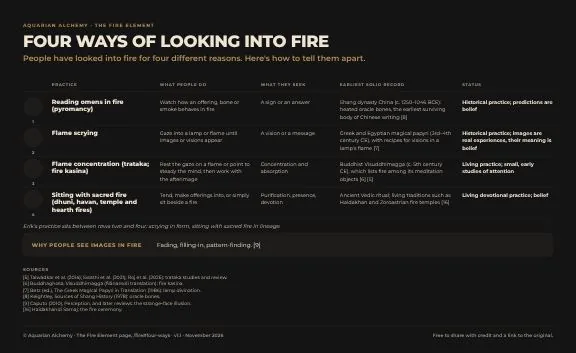
A field guide to omen-reading, scrying, flame concentration and sitting with sacred fire, with their earliest records.
What a candle flame is really doing, from melting wax to glowing soot.
A printable two-minute candle meditation with a no-flame option.
Explore the original research, historical references and creator credits behind each resource. We believe understanding where knowledge comes from is an important part of learning.
Picture credits